 JUVENIS Vouchers
 JUVENIS Vouchers
TCA peel and fruit acid peel in Vienna
Chemical peels and fruit acid peels
A peel has a very regenerative effect on the skin. It removes the upper parts of the skin layer, stimulates collagen production in deeper skin layers and inhibits acne bacteria (Propionibacterium Acnes). Because of these properties it can reduce fine lines, even out pigment irregularities, refine pores, heal inflammations and improve skin blemishes.
At JUVENIS in Vienna, peels are performed by our experienced dermatologist, for whom your wellbeing and health come first. The offering includes chemical peels and fruit acid peels.
Treatments & Therapies
Peels at JUVENIS in Vienna
Usually the face and décolleté are treated, but in some cases also the back and the backs of the hands. At least 4 weeks before the first peeling treatment, pigment-stabilizing cream therapy should be started. In total about 3–10 treatments are advisable, each producing a visible improvement.
The skin begins to peel after approx. 2 days. This lasts about 3–5 days. It is especially important that you strictly avoid the sun and use sun protection products after peels. Such peels are NOT performed during the warm season.
Please contact JUVENIS by phone at +43 1 236 3020, by e-mail at empfang@juvenismed.at or via the contact form, to arrange a consultation or treatment appointment.
TCA – Peeling in Vienna at JUVENIS
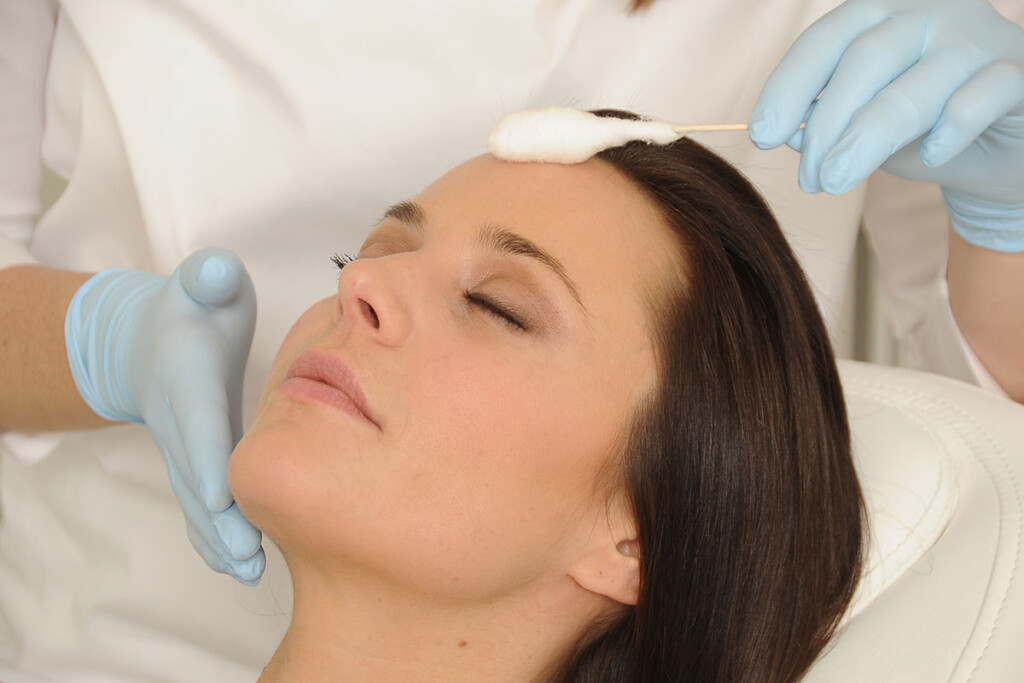
The Trichloroacetic acid peeling(TCA-Peeling) is a chemical peeling method that is used in many ways as a cosmetic or dermatological procedure. The intensive effect of the peel leads to the removal of dead skin flakes and parts of the outermost skin layer (epidermis).
Indications:
Fruit acid peels in Vienna at JUVENIS
The fruit acid peel is by now a proven procedure for a number of skin changes. It causes a temporary loosening of the uppermost skin layers ("peeling effect"). This thins the stratum corneum. Active ingredients can penetrate the skin much better. In addition, the peeling action stimulates the epidermis to renew itself.
Indications:
Treatment regions
TCA peeling treatment procedure
The treatment may burn uncomfortably, but this subsides after some time. In the following days the skin may be red and peel. High sun protection is absolutely necessary for several weeks after the treatment.
Fruit acid peeling treatment procedure
High sun protection is absolutely necessary for several weeks after treatment.
Costs
| Treatment | Price |
|---|---|
| Superficial peels: 1st region | € 110-180 |
| Superficial peels: each additional region | plus € 100 |
| Medium-depth peels: 1st region | € 270-370 |
| Medium-depth peels: each additional region | plus € 100 |
| Deep peels: 1st region | € 480-740 |
| Deep peels: each additional region | plus € 100 |
Peels with fruit acid, glycolic acid, salicylic acid and trichloroacetic acid – peeling regions: face, décolleté, back, backs of hands
For a pure consultation (without subsequent treatment), we charge a consultation fee of € 90.
Testimonials
1 review Chemical peels (TCA peeling) and fruit acid peels in Vienna
My skin is superMs. V. (40-50 years): “Thank you! My skin is great. You are for me the [...] |
FAQs
A chemical peel is a dermatological treatment in which special acids are applied to the skin to selectively renew the outermost skin layers. This stimulates skin regeneration and the skin's appearance can smoother, fresher and more even appear.
At JUVENIS, among others, the following peels are used:
Fruit acid peel (AHA peel) – superficial peel to improve skin texture and glow
TCA peel (trichloroacetic acid) – more intensive peel to treat pigmentation spots, scars or fine lines
The suitable method is selected individually according to skin type and condition.
Chemical peels are suitable for treating:
Acne and problematic skin
Acne scars
Pigment spots and sun damage
fine lines and wrinkles
uneven skin texture
Enlarged pores
The skin often appears clearer, smoother and fresher.
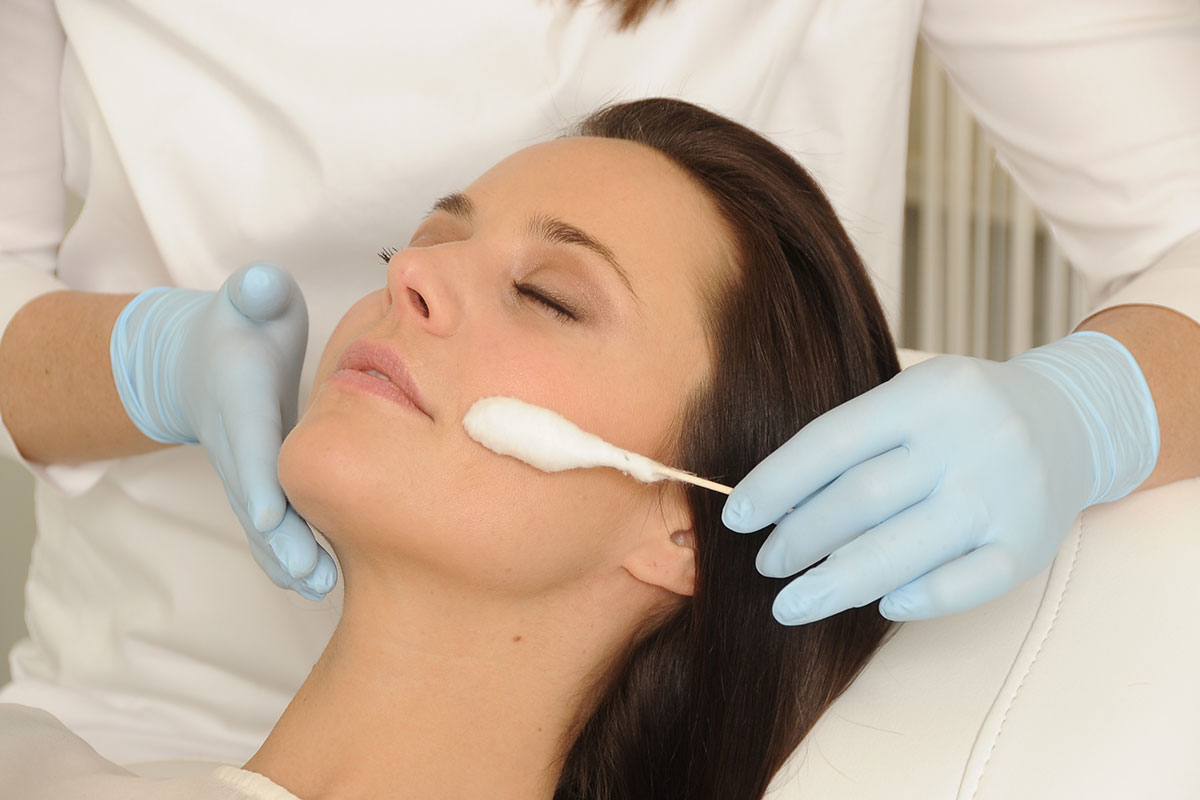
After the skin has been cleansed, the peel is applied precisely to the areas to be treated. The exposure time depends on the chosen peel and skin type. Afterwards the skin is neutralized and soothed. The treatment usually lasts 20 to 30 minutes.
During the treatment, a slight burning or tingling may occur, which is usually well tolerated. More intensive peels can cause a stronger warming sensation.
After a superficial peel the skin may be slightly reddened. With stronger peels, in the following days there may be a visible skin flaking may occur, as the skin renews.
Many patients notice an improvement in their complexion after just a few days. The skin looks fresher and smoother. With more intensive peels the final result usually appears after a few weeks.
For optimal results, multiple sessions are recommended at intervals of several weeks. The exact number depends on the condition of the skin and the desired improvement.
After a chemical peel, a consistent sun protection (SPF 50) particularly important. Intense sun exposure, saunas and tanning beds should be avoided in the days after the treatment.
Temporarily, redness, a feeling of tightness or flaking may occur. These reactions are part of the skin renewal process and usually subside within a few days.
The costs depend on the type of peel and the treated skin area.
Superficial peel 1 region from approx. € 110
Medium-depth peel 1 region from approx. € 270
Deep peel 1 region from approx. € 480
As part of the consultation, you will receive an individual treatment and cost plan.
Since this is usually a cosmetic procedure, the costs are usually not covered by health insurance.
At JUVENIS, peeling treatments are performed exclusively by experienced doctors and medical professionals performed. Through an individualized skin analysis, we select the appropriate peel for your skin and optimally adjust intensity and active ingredients. The goal is a visibly improved skin structure with the highest safety and medical quality.
We have answered the most frequently asked questions on the topic of Peels answered. If you have any further questions, please contact us via empfang@juvenismed.at or at +43 1 236 3020.
Alternative and complementary treatments


Contact
Related blog posts
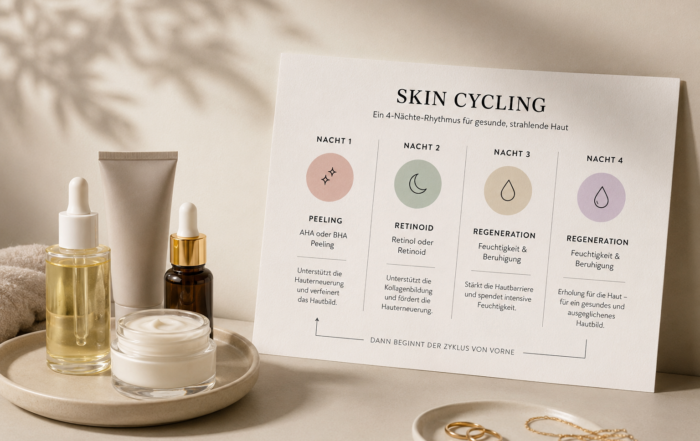
Skin Cycling: Sensible or just a TikTok hype?
Retinol, peels, vitamin C, niacinamide and many other active ingredients: Modern skincare offers a wide range of products. But anyone who uses too many active ingredients at the same time can quickly overwhelm their skin. This is exactly where a beauty trend comes in [...]

Dull skin? Here's how to get your glow back
The skin looks tired, pale and less radiant, even though you get enough sleep? A dull complexion can have many causes. Lack of moisture, stress, UV radiation, environmental influences and the natural aging of the skin can cause the skin to [...]
Aesthetic medicine for men: The most popular treatments
Aesthetic medicine is by no means just a women's topic anymore. More and more men want a fresh, well-groomed and vital appearance without appearing noticeably altered or unnatural. The focus is usually on subtle treatments with manageable downtime, [...]
Responsible for the content of this page: a.o. Univ. Prof. Dr. med. Tamara Kopp