 JUVENIS Vouchers
 JUVENIS Vouchers
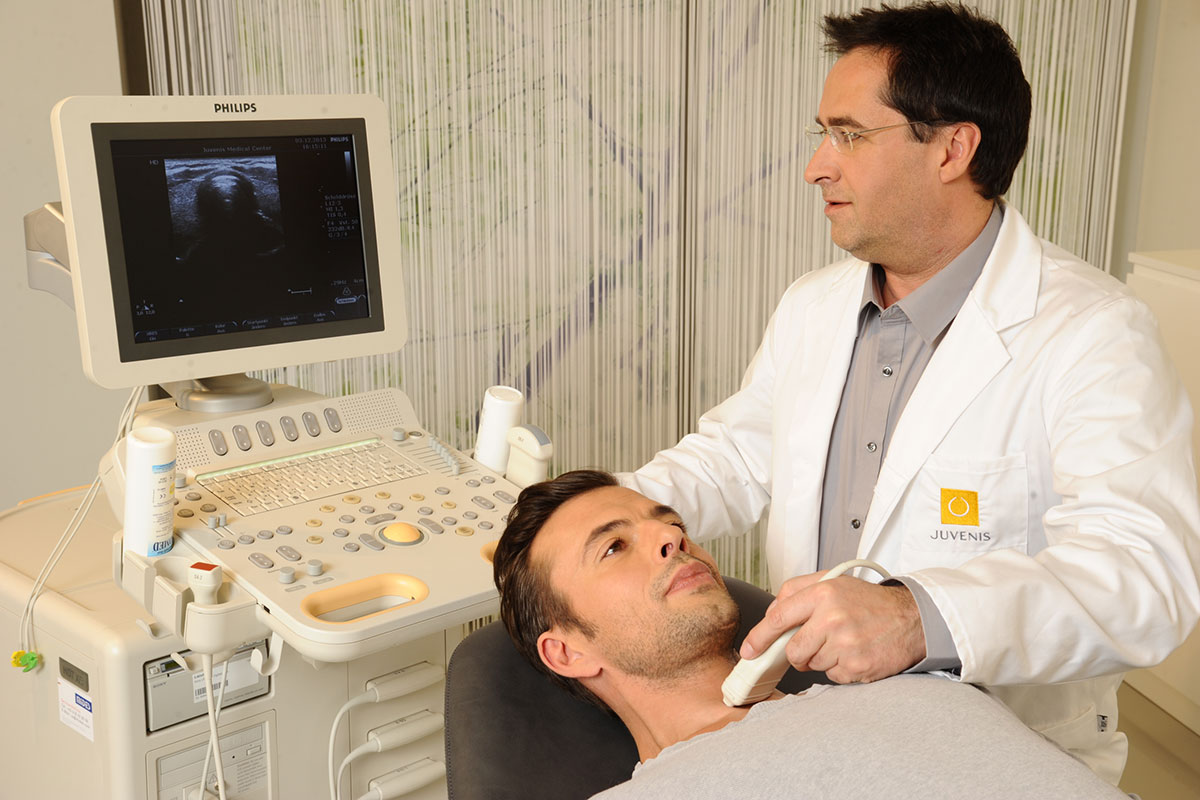
Thyroid examination at JUVENIS in Vienna
Examination of the thyroid
The main function of the thyroid is the storage of iodine and the production of the iodine-containing thyroid hormones triiodothyronine and thyroxine as well as the peptide hormone calcitonin. The follicular epithelial cells of this gland (thyrocytes) produce iodine-containing thyroid hormones and play an important role in energy metabolism and the growth of individual cells as well as the organism as a whole.
This important organ is the origin of many diseases, so disturbances of hormone metabolism can lead to an underactive or overactive thyroid (hypothyroidism or hyperthyroidism). These functional disorders often cause a marked deterioration in well-being.
Thyroid dysfunctions
Signs of an underactive thyroid
The following symptoms may be signs of an underactive thyroid:
Please contact JUVENIS by phone at +43 1 236 3020, by e-mail at empfang@juvenismed.at or via the contact form, to arrange a consultation or treatment appointment.
Signs of an overactive thyroid
The following symptoms may be signs of an overactive thyroid:
Treatments & Therapies
We are happy to clarify during a consultation whether there is a thyroid dysfunction.
Costs
| Treatment | Price |
|---|---|
| Thyroid treatment clinic | € 190 |
FAQs
The thyroid gland produces hormones that influence the affect metabolism, circulation, energy balance and many bodily functions. Even small changes can affect general well-being.
Possible symptoms include:
Fatigue or exhaustion
Weight gain or weight loss
Heart palpitations
Nervousness or inner restlessness
concentration problems
Hair loss
Sensitivity to cold or heat
The most common diseases include:
Underactive thyroid (hypothyroidism)
Overactive thyroid (hyperthyroidism)
Thyroid nodules
Thyroid inflammations
Enlargement of the thyroid gland (goiter)
The diagnostic workup may include:
detailed medical history
Physical examination
Blood test of thyroid values
Ultrasound examination of the thyroid gland
First, there will be a discussion about your symptoms and previous illnesses. Subsequently, the necessary examinations will be carried out. The examination usually takes approx. 20 to 30 minutes.
No, the thyroid examination is painless and non-invasive. Only the blood draw can cause a brief prick.
The ultrasound findings can usually be discussed immediately. Lab results are typically available after a short time.
Thyroid nodules are common and usually benign. Depending on the findings, a further evaluation or regular monitoring may be recommended.
Treatment depends on the diagnosis and may include:
Drug therapy
Regular check-ups
Adjustment of hormone levels
further specialized assessments
The costs depend on the scope of the examination and the tests required. The consultation for a thyroid treatment costs from € 190.
The Exact prices will be provided in a personal consultation..
Since these are medical examinations, a (partial) coverage of costs by the health insurance is often possible.
At JUVENIS you benefit from modern diagnostics, ultrasound technology and experienced specialist physicians. Through precise assessment and individualized care, thyroid disorders can be detected early and treated in a targeted manner.
We have answered the most frequently asked questions on the topic of Thyroid answered. If you have any further questions, please feel free to contact us via empfang@juvenismed.at or at +43 1 236 3020.
Alternative and complementary treatments
Contact
Related blog posts
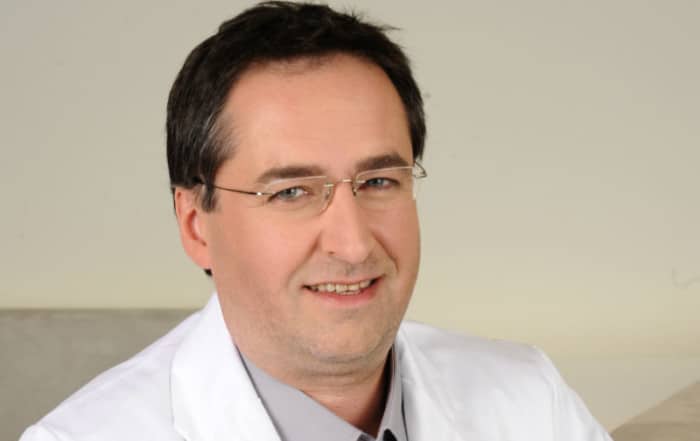
Thyroid and nuclear emergency – Online webinar with Dr. Anton Staudenherz
In the context of the continuing education series Online Thyroid Thursday, a webinar was held on the topics "Nuclear threat from a nuclear power plant accident and nuclear weapons" and "Emergency planning and iodine blockade". Information on the mode of potassium iodide intake and other important aspects in [...]
Prim. Univ.-Prof. Dr. Anton Staudenherz new head of the Clinical Institute for Nuclear Medicine
Prim. Univ.-Prof. Dr. Anton Staudenherz was appointed on 1 August 2018 as head of the Clinical Institute for Nuclear Medicine, Molecular Imaging and Special Endocrinology at the University Hospital St. Pölten. Prim. Prof. Dr. Anton Staudenherz is a specialist in internal medicine. [...]
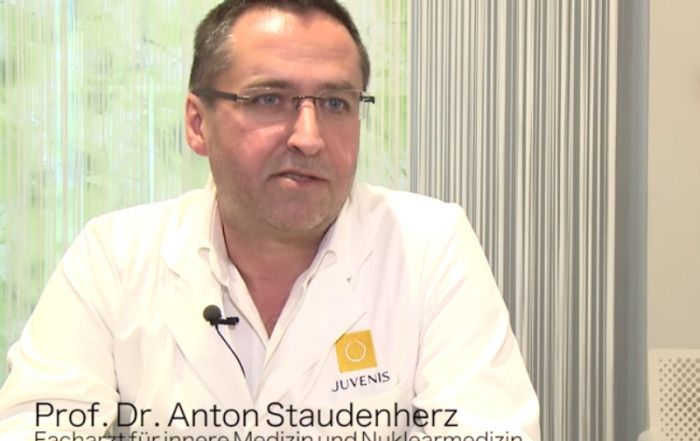
Assoc. Univ. Prof. Dr. Anton Staudenherz informs about hyperthyroidism
In hyperthyroidism, also known as an overactive thyroid, there is too much thyroid hormone in the blood. Assoc. Univ. Prof. Dr. Anton Staudenherz provides information on hyperthyroidism. Assoc. Univ. Prof. Dr. Anton Staudenherz is a specialist in nuclear medicine at the Vienna General Hospital (Wiener AKH) [...]
Responsible for the content of this page: Prim. Prof. Dr. med. Anton Staudenherz