 JUVENIS Vouchers
 JUVENIS Vouchers
Natural results with polydioxanone (PDO) thread lifting
Polydioxanone (PDO) thread lifting in Vienna
Polydioxanone (PDO) thread lifting is an innovation both in smoothing fine lines such as lower eyelid and upper lip wrinkles, and in lifting various facial and body areas such as jowls, eyebrows or a slight double chin. The smoothing of the skin, e.g. in the cheek area, can be significantly improved by the simultaneous use of platelet-rich plasma (PRP).
PDO stands for polydioxanone, a material that has been used worldwide for decades as a surgical suture material. Today it is mainly used to tighten and smooth the skin — by stimulating collagen production. Due to its decades of use, it has demonstrated high tolerability.
Depending on the thickness, twists, barbs and length of the threads, an individual mix of these threads can be chosen for each face to form a kind of mesh within the skin that smooths the skin, or to gather the skin along the threads and thus lift the skin against gravity.
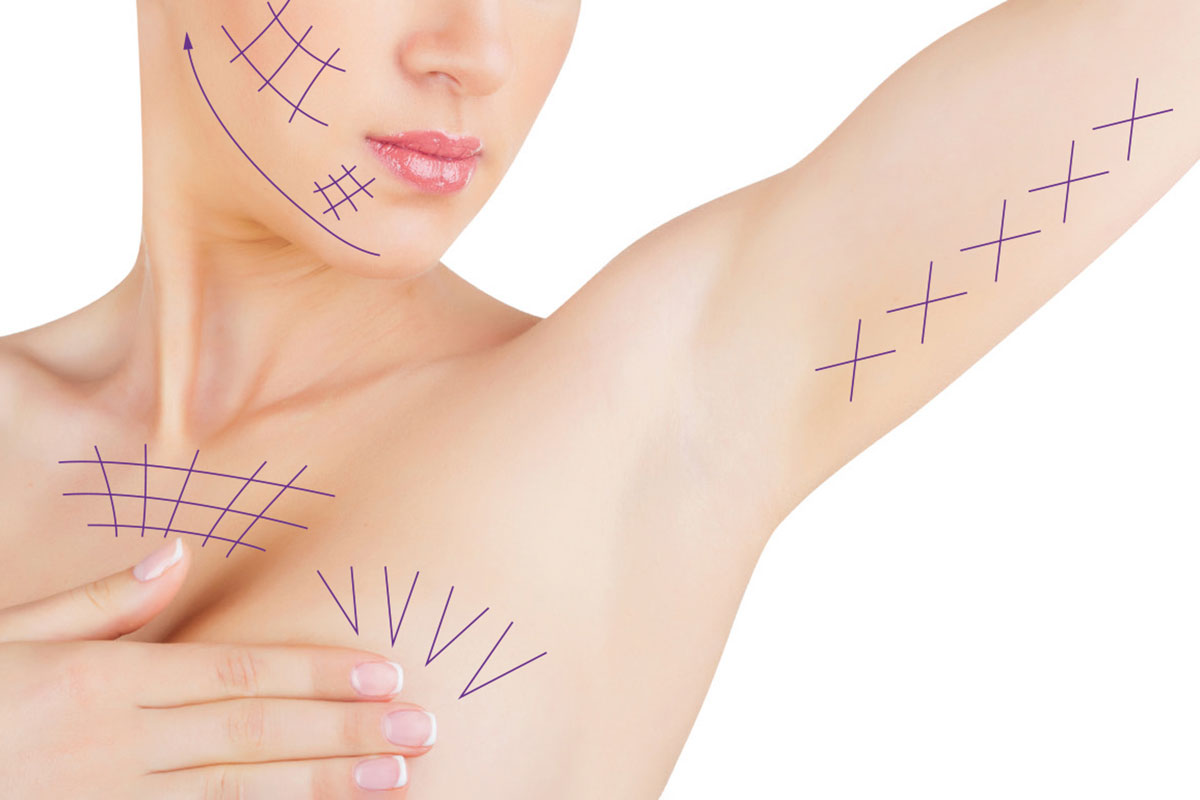
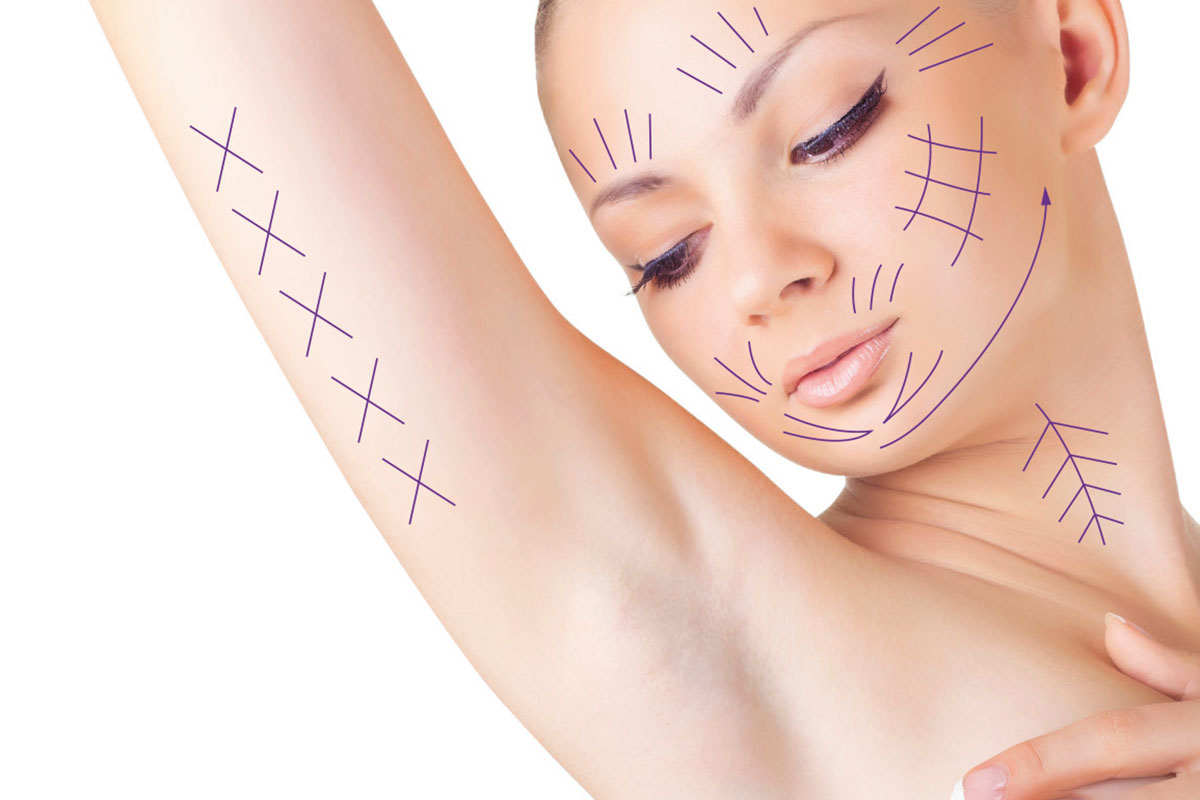
Treatment regions
Treatment procedure
The polydioxanone (PDO) thread lifting treatment is extremely simple: after a barely noticeable prick, the threads are inserted into the skin with a cannula, the cannula is then removed and the thread remains in the skin. When treated in combination with platelet-rich plasma, the cannula is also used to introduce the enriched plasma and is only removed afterwards. Results are immediately visible and are further improved over time by tissue regeneration.
Please contact JUVENIS by phone at +43 1 236 3020, by e-mail at empfang@juvenismed.at or via the contact form, to arrange a consultation or treatment appointment.
Over time the threads dissolve. This depends, among other things, on the thickness of the threads. Thus the durability is individual and varies depending on the thread. It ranges between 6 and 9 months or between 12 and 15 months, after which a refresh is recommended. In general one can say: the more threads, the better and longer-lasting the result.
A treatment with PDO threads can be combined with a Plasma lifting be combined.
Here you can find a video showing how a thread lifting works:
Costs
| Treatment | Price |
|---|---|
| Smoothing of fine lines on the lower eyelid with polydioxanone (PDO) thread lifting | from € 490 |
| Smoothing of fine lines on the upper lip with polydioxanone (PDO) thread lifting | from € 620 |
| Polydioxanone (PDO) thread lifting of individual skin areas e.g. eyebrows and jowls | from € 720 |
| Combination price for PDO threads and platelet-rich plasma (Plasmalifting) | from € 800 |
For a pure consultation (without subsequent treatment), we charge a consultation fee of € 90.
FAQs
PDO thread lifting is a minimally invasive method for skin tightening and skin rejuvenation without surgery. In the process, special resorbable threads made of polydioxanone (PDO) are inserted into the skin. These stabilize the tissue and at the same time stimulate the body's own collagen production on.
The threads produce a slight mechanical tightening effect and additionally stimulate the skin to form new collagen. As a result, the skin's texture is improved and the skin appears firmer, smoother and tighter.
The treatment is suitable for women and men with mild to moderate skin sagging, who wish for skin tightening without surgery. The procedure is particularly frequently used for:
sagging cheeks
fine lines and wrinkles
mild skin sagging in the face
sagging skin on the neck
decreasing skin elasticity
PDO threads can be used for, among other things:
Face and cheeks
Jawline
Neck
Eyebrow lift
fine wrinkles in the face
The treatment is individually adapted to your needs.
After a detailed consultation, the skin is locally anesthetized. Afterwards, the PDO threads are inserted under the skin using fine needles or cannulas. The treatment usually lasts 30 to 45 minutes.
Thanks to the local anesthesia, the treatment is usually well tolerated. During the treatment, you may perceive a slight feeling of pressure or tension.
A slight tightening effect is often visible immediately after the treatment. The final result develops over several weeks as collagen production is stimulated.
The PDO threads dissolve within about 6 to 12 months completely subsides. However, the skin often remains firmer for longer, as the newly formed collagen improves the skin's structure.
After the treatment, swelling, redness or small bruises may occur. These usually disappear within a few days.
During the first few days you should avoid strong facial expressions, intensive sports activity, sauna or solarium. Your doctor will inform you about further individual recommendations.
The costs depend on the number of threads used and the area treated.
Prices start at approx. € 490 per treatment.
As part of a personal consultation, you will receive an individual treatment and cost plan.
Since this is an aesthetic treatment, the costs usually not covered by health insurance.
At JUVENIS, thread lift treatments are performed exclusively by experienced doctors for aesthetic medicine carried out. Through precise technique, high-quality materials and individualized treatment concepts, we achieve achieve natural and harmonious results, which visibly tighten and rejuvenate your skin.
We have answered the most frequently asked questions on the topic of PDO thread liftinganswered. If you have any further questions, please feel free to contact us via empfang@juvenismed.at or at +43 1 236 3020.
Alternative and complementary treatments
At the JUVENIS medical center, various gentle procedures for wrinkle treatment are offered in Vienna. These include, among others:
Team



Dr. Dr. med.Bernhard Moser
Contact
Related blog posts

How are the first eye wrinkles treated?
Even if you pay great attention to skin care: eventually the first wrinkles appear on the face. Those who do not want to accept this and do not want to undergo a major procedure will find many gentle alternative treatments at JUVENIS. Prof. Dr. [...]
Responsible for the content of this page: a.o. Univ. Prof. Dr. med. Tamara Kopp. Dr. Igor Pona, Dr. Dr. Bernhard Moser