 JUVENIS Vouchers
 JUVENIS Vouchers
Clinical presentation, triggers and treatment
Treatment of atopic dermatitis – neurodermatitis
Atopic dermatitis (also atopic eczema) is a common skin disease that now affects up to 25% of children and 1–3% of adults. Over the past four decades the prevalence of atopic dermatitis has tripled in Western industrialized countries! Thanks to significant advances in understanding the underlying mechanisms, new therapies have been developed in recent years.
Atopic dermatitis is a chronic inflammatory skin disease that mainly affects the major flexural areas (inside of the elbows, behind the knees, neck) and is typically accompanied by very dry skin and severe itching. The disease can begin at different ages, but symptoms often appear during the first year of life, such as cradle cap on the scalp or rashes on the cheeks or torso/back. With good care, many of these children improve by the time they start school, so it is estimated that the condition persists in only about half of the children. Atopic dermatitis is often accompanied by other allergic conditions such as asthma, hay fever or food allergies.

Treatments & Therapies
Triggers of atopic dermatitis
Various triggering factors can provoke an acute flare at any time, even in previously stable atopic dermatitis. Knowledge of the possible triggers can be an important strategy for doctors and patients to reduce flares. It is important to clarify that avoiding triggers can lead to an improvement of atopic dermatitis, but not to a cure.
Common triggers include stimuli such as climatic factors (extreme heat, cold), sweating, various infections, contact with animal hair and stress. Environmental factors such as frequent washing without subsequent skin care, irritating clothing or scratching can also worsen the skin. In addition, an apparently harmless allergy to, e.g., grasses, house dust mites or birch can, through skin contact, lead to an acute flare.
Please contact JUVENIS by phone at +43 1 236 3020, by e-mail at empfang@juvenismed.at or via the contact form, to arrange a consultation or treatment appointment.
Therapy
The primary goal of therapy is to improve itching and skin inflammation. An individually tailored treatment plan makes it easier to manage the different severities and phases of atopic dermatitis.
Regular use of skincare products is important, as this significantly reduces skin dryness and itching. Possible triggers of flare-ups should also be identified and eliminated. In addition, temporarily itch-relieving, disinfecting, or cortisone-containing ointments can help to improve the inflammation. For very severe rashes, there is also the option of prescribing systemically acting medications to improve the condition.
Online training on the skin disease neurodermatitis – atopic dermatitis by Dr. Christine Bangert: selpers.com/atopische-dermatitis
This course covers the following topics on atopic dermatitis:
- How can I avoid flare-ups?
- How do I find a good cream for atopic dermatitis?
- How do I use cortisone cream correctly and what alternatives are there?
- What is light therapy and is it suitable for me?
- What treatment options are available?
- What can I do as a patient in everyday life to relieve itching and other symptoms?
Treatment regions
Costs
| Treatment | Price |
|---|---|
| Initial consultation for atopic dermatitis | € 190 |
FAQs
Neurodermatitis is a chronic inflammatory skin disease, which is accompanied by dry skin, itching, and recurrent eczema. The condition often occurs in flare-ups and can vary in severity.
Typical symptoms include:
intense itching
dry, sensitive skin
red and inflamed skin areas
scaly or oozing eczema
Symptoms can vary depending on age and skin type.
The condition arises from an interaction of various factors, including:
genetic predisposition
impaired skin barrier
immune reactions
Environmental factors such as allergens or stress
Treatment is individual and can include:
medical skin care to strengthen the skin barrier
anti-inflammatory therapies
medication-based treatments for more severe flare-ups
Advice on triggers and skin care
The goal is to to reduce flare-ups and stabilize the skin in the long term.
A complete cure is not currently possible. With the right therapy, however, the disease can very well controlled and quality of life significantly improved will be.
At the beginning, a detailed dermatological examination and medical history. Subsequently, an individual therapy plan is created, which is tailored to your skin and your symptoms.
Most treatments are not painful,. The goal is to soothe the skin and relieve symptoms.
Important measures are:
regular care suitable for your skin type
Avoiding known triggers
gentle cleansing of the skin
stress reduction
Depending on the therapy, side effects may occur; however, these are discussed in detail beforehand. The treatment is chosen so that it is as gentle and effective as possible is.
The costs depend on the type of treatment and the individual therapy plan. An initial consultation for neurodermatitis costs € 190.
The Exact prices will be provided in a personal consultation..
Since this is a medical treatment, a (partial) cost coverage by health insurance is often possible. You will receive an invoice for submission.
At JUVENIS you will be cared for by experienced dermatologists supervised. Through modern therapeutic approaches, individualized care and targeted skincare concepts, a long-term stabilization of your skin and a significant improvement in quality of life aimed for.
We have answered the most frequently asked questions on the topic of Atopic dermatitis answered. If you have any further questions, please feel free to contact us via empfang@juvenismed.at or at +43 1 236 3020.
Team

Contact
Related blog posts
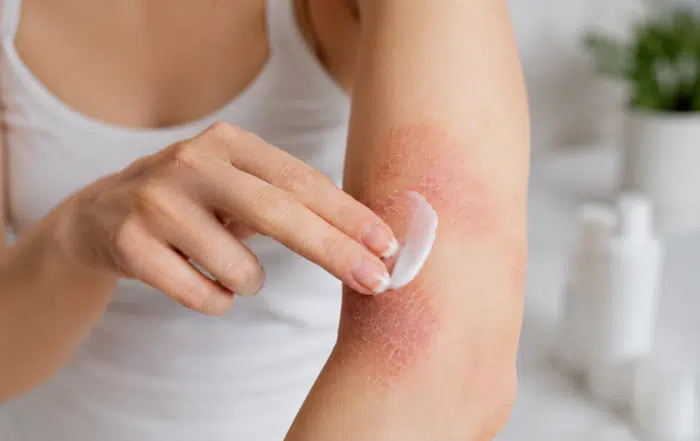
Treating atopic dermatitis: What helps with dry, irritated skin?
Dry, reddened and intensely itchy skin can significantly impair everyday life. Many sufferers suffer from neurodermatitis (atopic dermatitis) – a chronic inflammatory skin disease that runs in flares and can affect both children and adults. A [...]
Chronic skin diseases: Video series with Senior Physician Dr. Christine Bangert
Is it contagious? That is probably one of the first questions many people ask when they encounter someone with a skin condition unfamiliar to them. In most cases, however, this fear of infection is completely [...]
Information from Dr. Christine Bangert about Atopic Dermatitis – Neurodermatitis
In the training sessions on atopic dermatitis (neurodermatitis) you will receive information about this skin disease, which is important for patients. Dr. Christine Bangert explains neurodermatitis - atopic dermatitis Dr. Christine Bangert, dermatologist at JUVENIS in [...]
Responsible for the content of this page: a.o. Univ. Prof. Dr. med. Tamara Kopp, OÄ Dr. med. Christine Bangert, OÄ. Dr. med. Elli Katherina Greisenegger, OÄ Dr. med. Tamara Arnoldner