 JUVENIS Vouchers
 JUVENIS Vouchers
Dermatological screening at JUVENIS
Skin cancer screening & mole check Vienna
Over the course of our lives, some moles appear, some grow, and others even change color. This can be harmless. And yet: regular self-examination as well as a specialist skin cancer screening or mole check at the JUVENIS medical center in Vienna can save lives. Because the earlier Skin cancer is detected, the better the chances of a cure.
Every year, more and more people are newly diagnosed with skin cancer. Sun exposure is therefore still underestimated. The good news: skin cancer can be detected in early stages and is usually curable then. For this reason, early detection of skin cancer is — alongside a healthy amount of sun enjoyment and sun protection — an important factor for healthy skin.
Treatments & Therapies
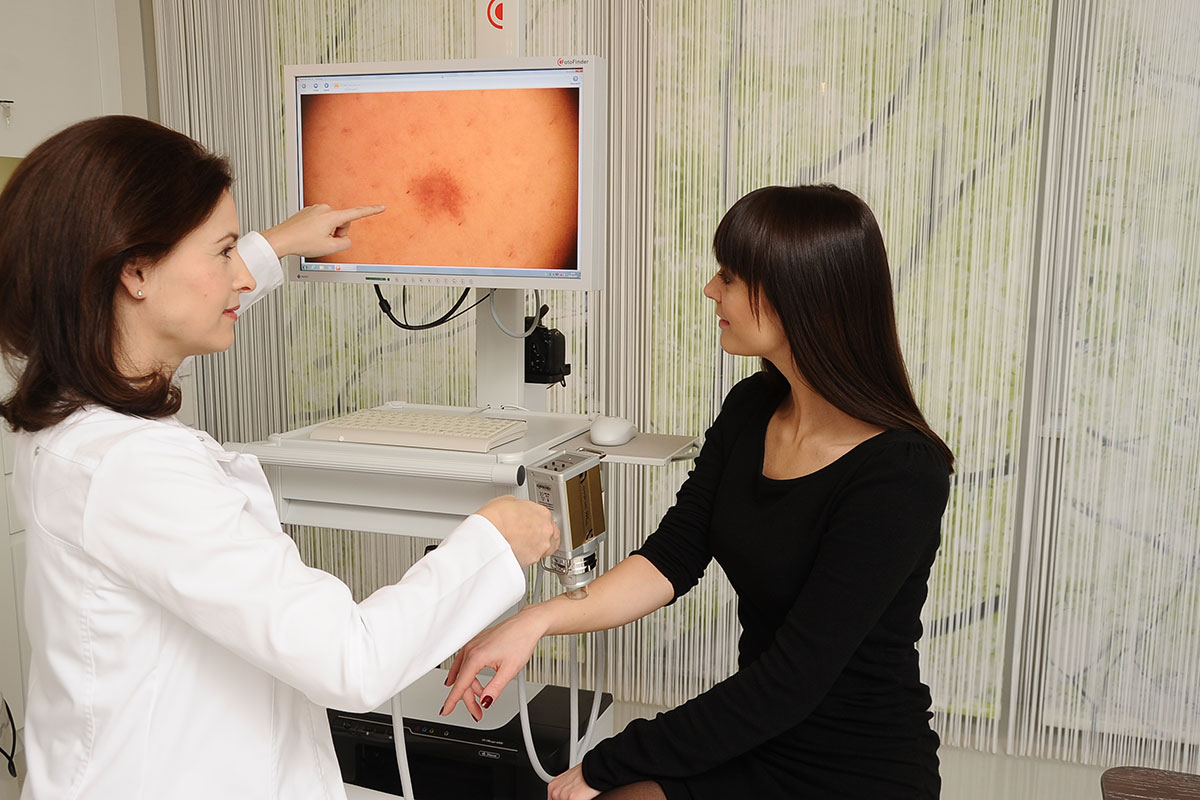
Digital epiluminescence microscopy using FotoFinder Dermoskop at JUVENIS
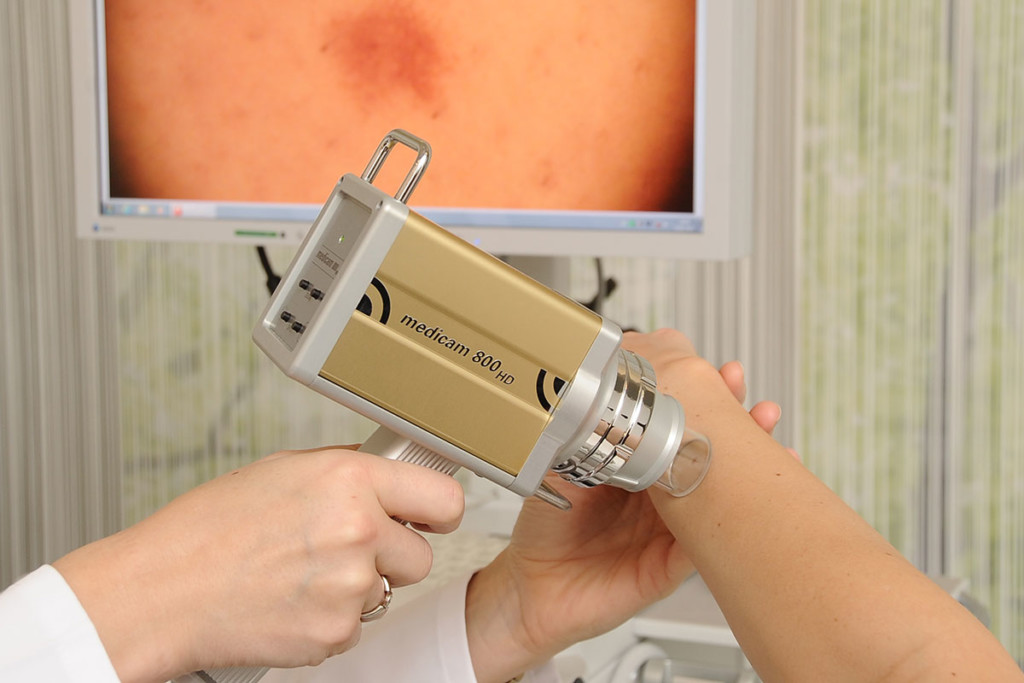
Skin cancer screening in Vienna at JUVENIS is performed with a modern method for mole checking: digital epiluminescence microscopy. A whole-body screening is carried out using the FotoFinder Dermoskop. This allows the doctor to see into the top layer of the skin and assess abnormalities. The mole check should ideally take place once a year . The findings and images are saved, which is very helpful for follow-up examinations.
Please contact JUVENIS by phone at +43 1 236 3020, by e-mail at empfang@juvenismed.at or via the contact form, to arrange a consultation or treatment appointment.
Goal of skin cancer screening and mole check in Vienna
The goal of skin cancer screening is to detect both non-melanoma and melanoma skin cancer as early as possible. Both melanoma and non-melanoma skin cancers must be treated. The earlier they are detected and treated by a mole check at the JUVENIS medical center in Vienna, the better the chances of cure.
Treatment of skin cancer is offered by JUVENIS in Vienna.
If skin cancer is diagnosed, the tumor is immediately surgically removed by Dermatosurgery .
Treatment regions
Procedure for mole check
During skin cancer screening or a mole check in Vienna, nevi are examined in detail with an epiluminescence microscope. For screening, JUVENIS uses the most up-to-date method currently available: digital epiluminescence microscopy. The FotoFinder Dermoskop is a device that can capture digital images of moles in detailed, high resolution.
This makes it possible for us to examine the mole closely and also monitor changes. In detail, the FotoFinder Dermoskop allows us to look into the top layer of the skin and assess the key criteria for malignancy, such as the structure and arrangement of pigment and blood vessels as well as color.
Please contact JUVENIS by phone at +43 1 236 3020, by e-mail at empfang@juvenismed.at or via the contact form, to arrange a consultation or treatment appointment.
Dysplastic nevi and melanomas can be detected at an early stage. The FotoFinder Dermoscope has software that scans the recorded mole and algorithmically calculates how dangerous the mole is. If the last visit to the dermatologist was more than a year ago, one should definitely go for a mole check or skin cancer screening.
Costs skin cancer screening & mole check
| Treatment | Price |
|---|---|
| Skin cancer screening & mole check: examination of the entire body for suspicious skin changes & sun protection consultation | from € 190* |
*Additional services (such as digital photo documentation: € 30) are billed separately.
Moles & skin cancer
What are moles/atypical nevi/melanomas?
Everyone has more or fewer moles/freckles on their skin. These are called nevi in medical terminology and are benign. In addition to these benign nevi, there are also atypical nevi that carry an increased risk of progressing to a melanoma (malignant melanoma). Sometimes a seemingly harmless nevus can also hide a melanoma.
Please contact JUVENIS by phone at +43 1 236 3020, by e-mail at empfang@juvenismed.at or via the contact form, to arrange a consultation or treatment appointment.
What types of skin cancer are there?
Two types of skin cancer are distinguished:
When to get a skin cancer screening?
How often should a mole check be carried out?
A skin cancer screening examination should in principle be carried out once a year. For patients at risk, the examination may, depending on the case, be necessary more frequently.
The risk group includes:
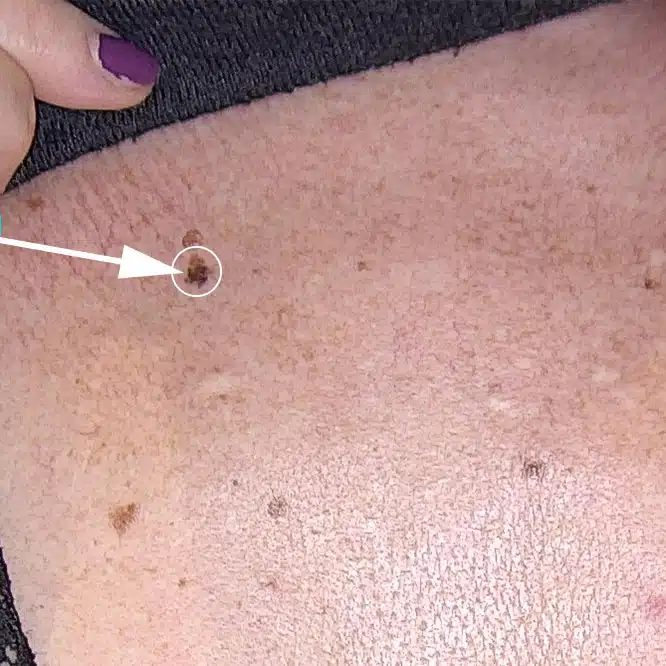
Melanomas can be this small and inconspicuous!
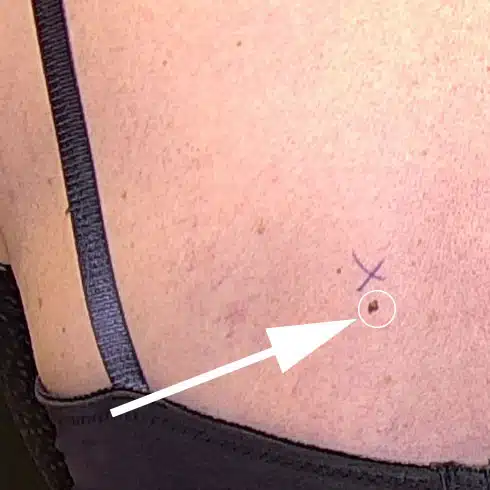
Image 1 shows a melanoma recognized early by dermatologist Dr. Tamara Kopp (see arrow). The suspicion was histologically confirmed after removal.
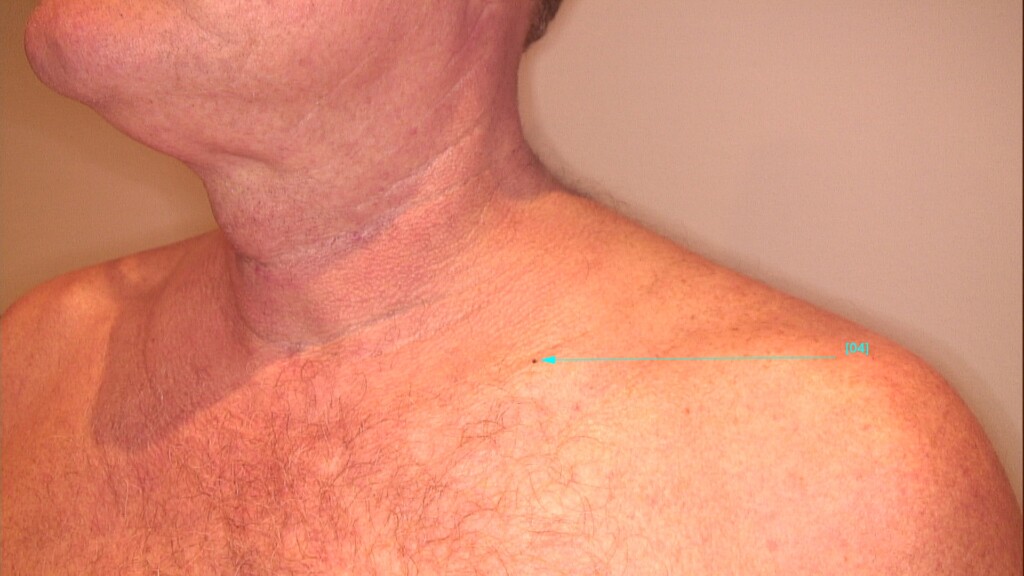
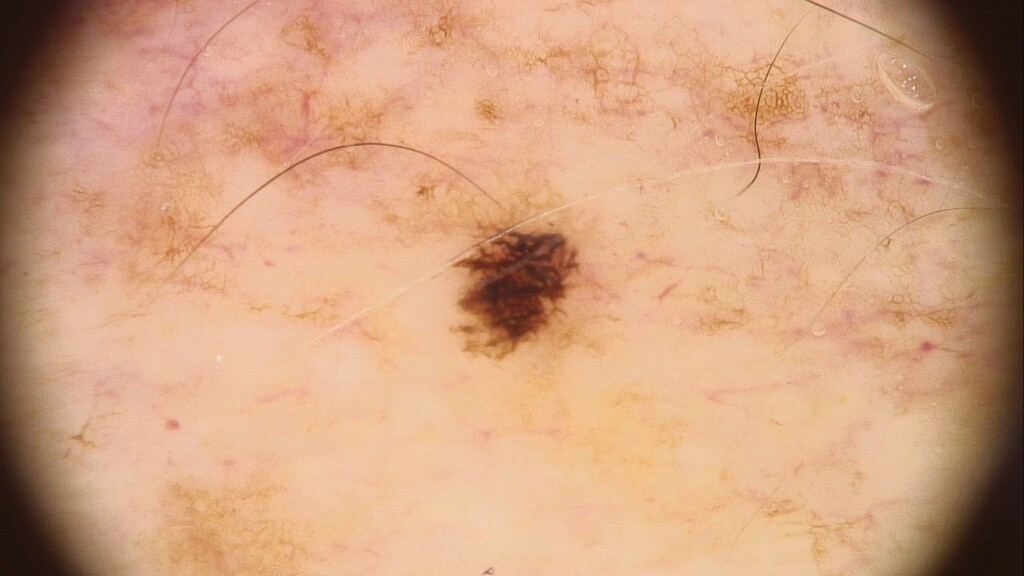
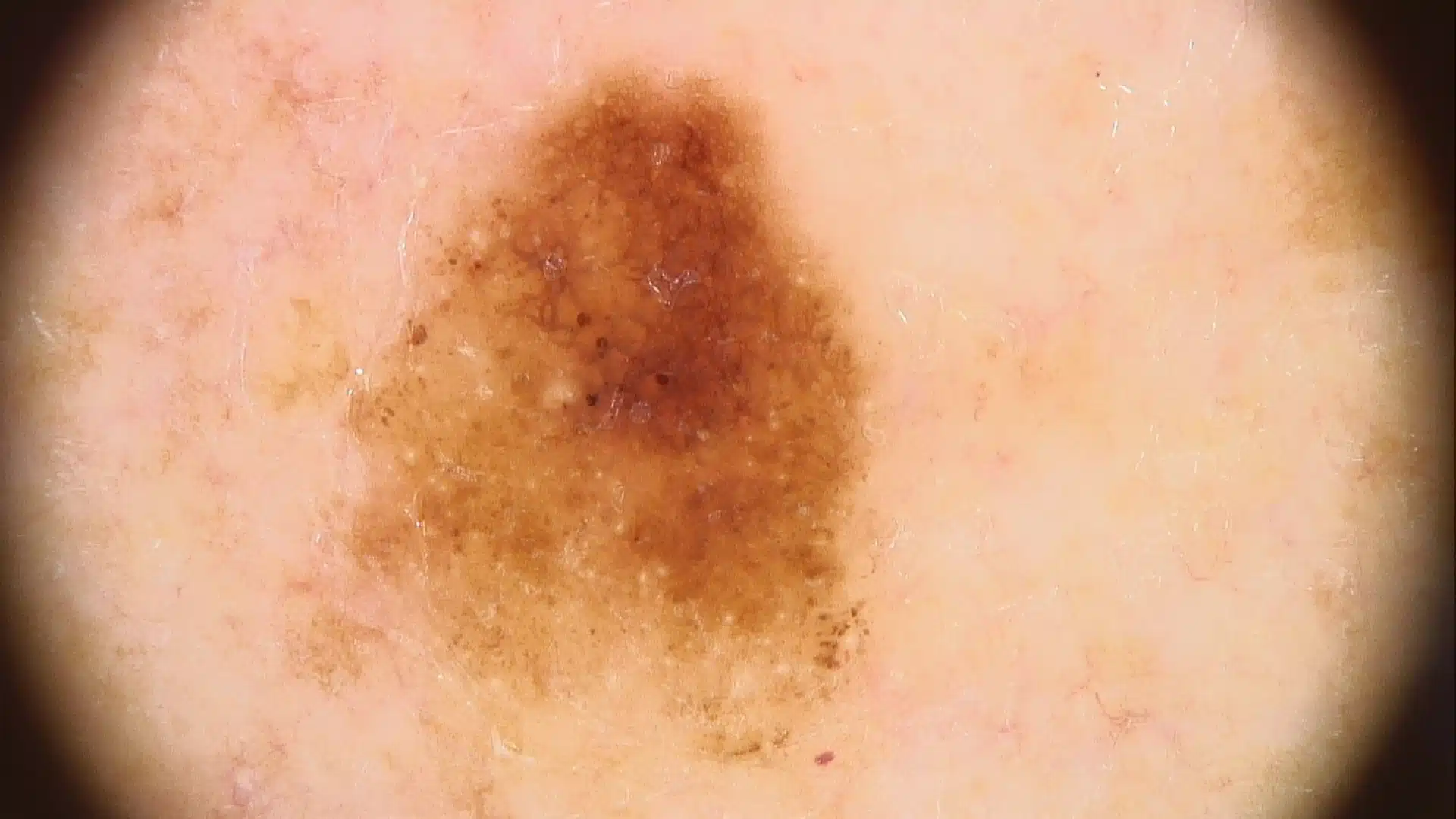
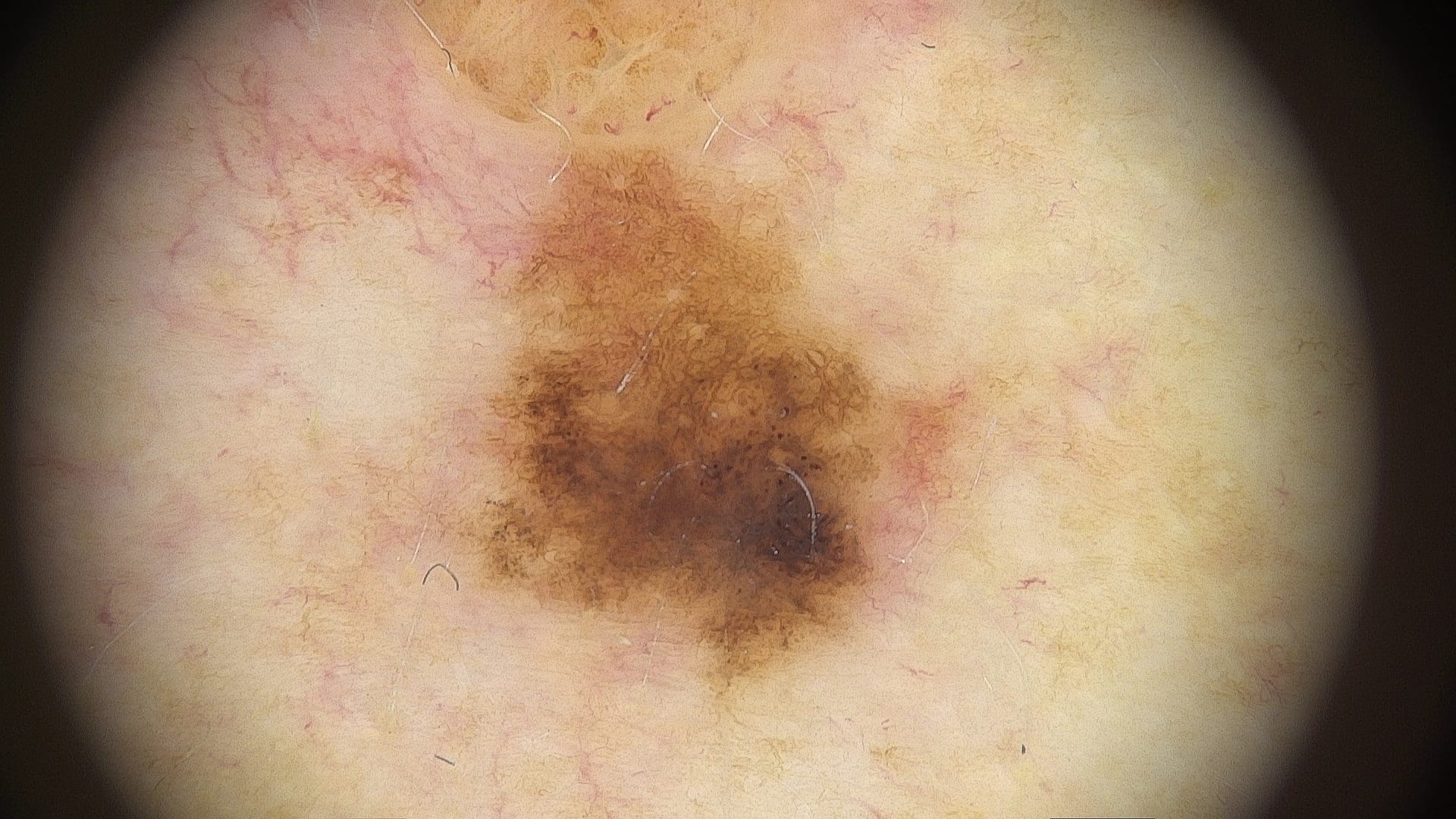
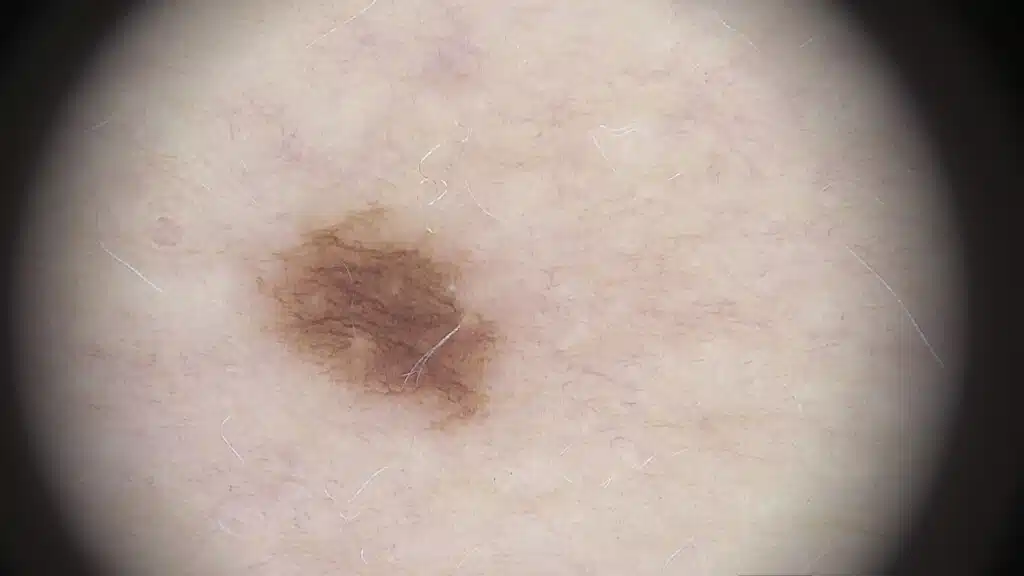
Image 2 shows the melanoma highly magnified, captured and documented with our FotoFinder Dermoskop. The FotoFinder Dermoskop is a device that can capture digital images of moles in detailed, high resolution, allowing the mole to be examined closely and changes to be detected immediately.
If a melanoma is detected at an early stage, the chance of complete cure increases. The Treatment of skin cancer and the dermatosurgical removal was performed by dermatologist Dr. Tamara Kopp.
During a mole check, dermatologist Dr. Tamara Kopp discovered a suspicious mole on the shoulder blade of a patient that turned out to be a melanoma — a malignant form of skin cancer. The finding was confirmed after thorough analysis with a dermatoscope.
To prevent spread, the melanoma was removed in a small surgical procedure. The affected tissue was removed generously to ensure no cancer cells remained. The procedure was successful, and the wound healed very well.
This experience shows how important it is to detect skin changes early and to go for regular skin cancer screenings — because when detected early, skin cancer is in most cases easily treatable.
Using the arrows you can view the before-and-after photos and compare them precisely.
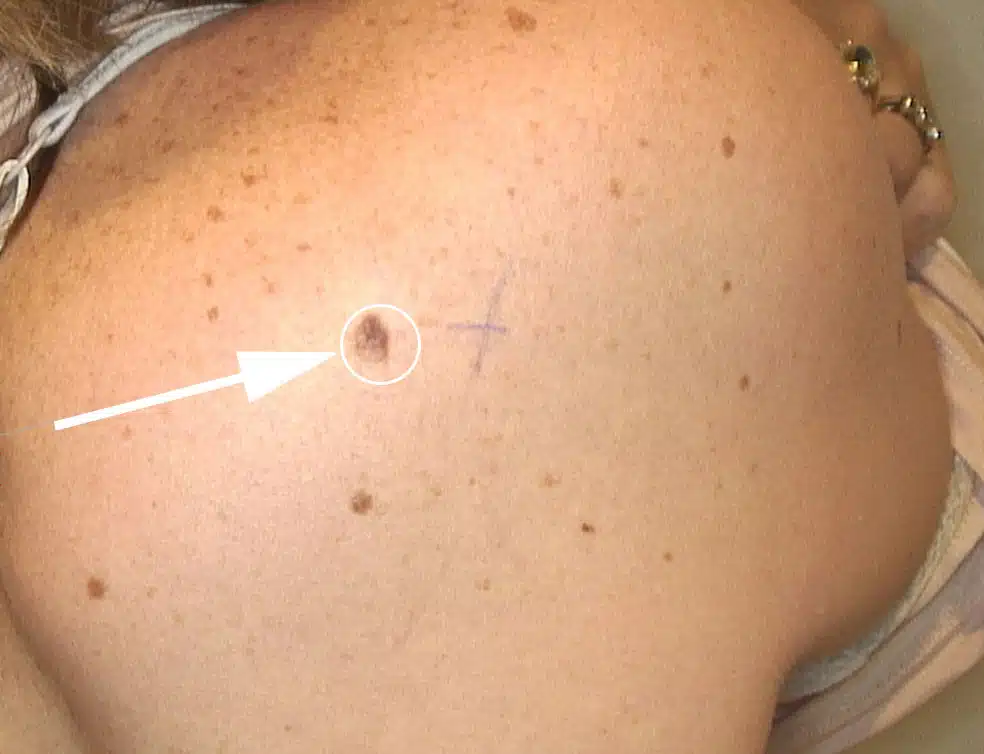
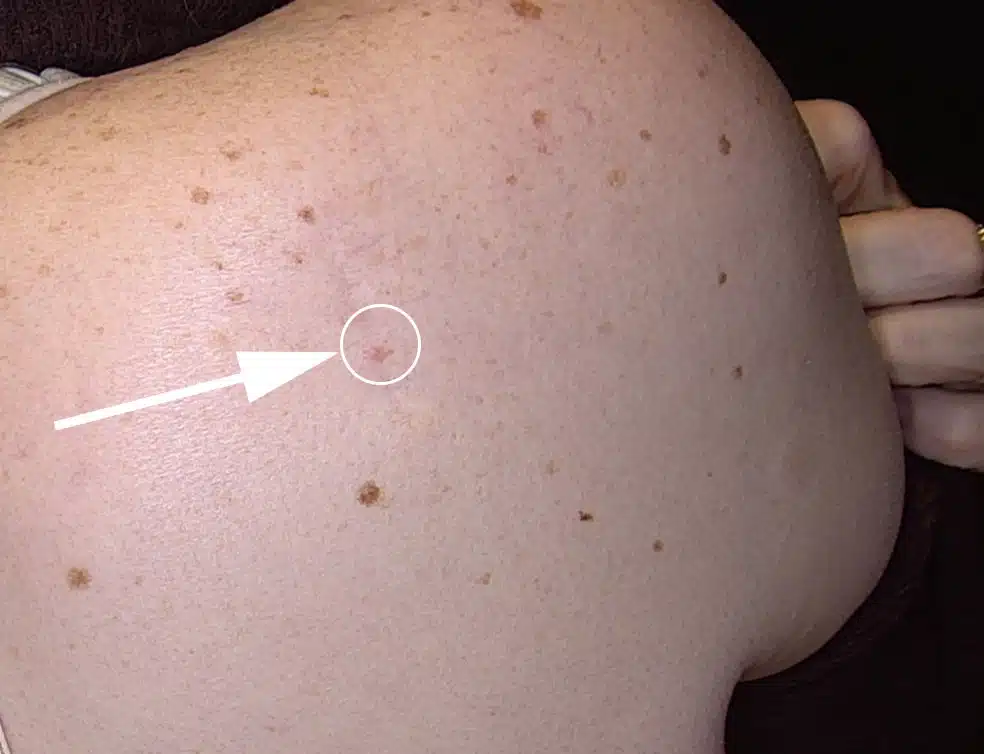
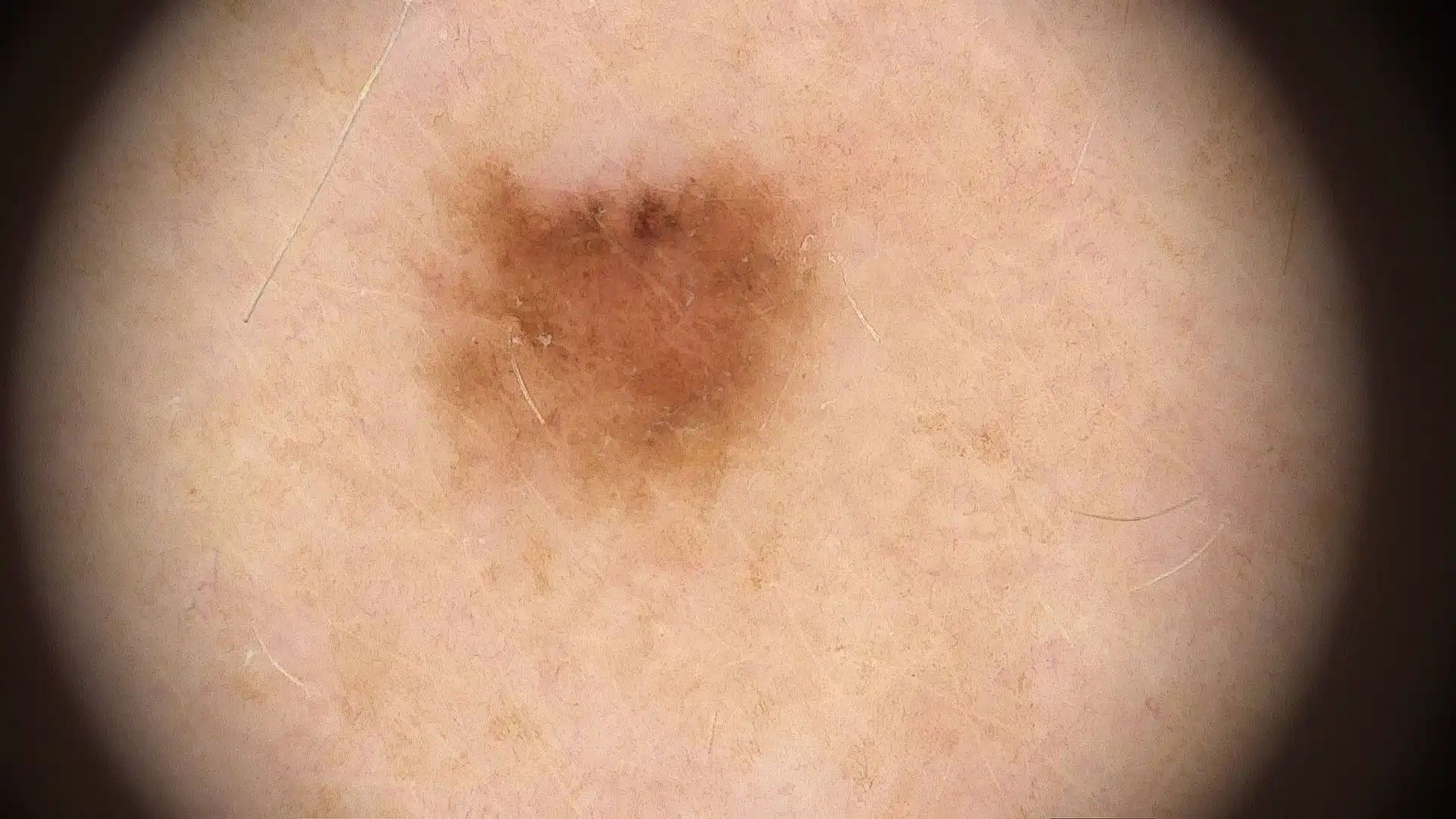
In this photo you see a macro shot of the melanoma. It impressively shows the characteristic warning signs of this dangerous skin lesion. Typical are asymmetric shapes, irregular borders, uneven color distribution with different shades of brown and black, and a diameter of more than 5 millimeters.
Such details illustrate how important it is to check the skin regularly and to have a dermatological examination if there are any abnormalities. Early detection can be life-saving because melanomas can spread quickly. If in doubt, one should not hesitate to seek medical advice.
During the mole check Dr. Tamara Kopp noticed a pigment change that differed in color, shape and size from the other moles. By using modern diagnostic techniques such as dermatoscopy she could recognize initial signs of a malignant change. For definitive clarification a tissue sample was taken and examined in the lab — with the result that it was indeed an early-stage melanoma.
In this photo you can see what the melanoma looked like on the patient (see arrow).
To the naked eye a melanoma may often appear only as a dark spot — but in extreme magnification a fascinating and at the same time alarming structure is revealed. Macro images of a malignant melanoma show a chaotic mosaic of irregular pigmentations, asymmetric borders and color transitions ranging from deep black through dark brown to reddish or even bluish inclusions.
This magnification impressively illustrates why early detection is so crucial. The smallest changes that are barely visible to the naked eye can become conspicuous under macro or dermatoscopic magnification. Thanks to modern imaging techniques, melanomas can be diagnosed earlier than ever before — a decisive advantage for chances of cure.
On this patient's back a suspicious mole was discovered by dermatologist Dr. Tamara Kopp. The suspicious tissue was removed and histologically examined. Dr. Tamara Kopp's suspicion was confirmed: it was a melanoma.
Malignant melanoma, also known as "black skin cancer", is one of the most aggressive types of skin cancer. It develops from pigment-producing cells (melanocytes) and can form metastases very early. Early detection and treatment are therefore crucial for successful therapy.
Using the arrows you can view the before-and-after photos and compare them precisely.
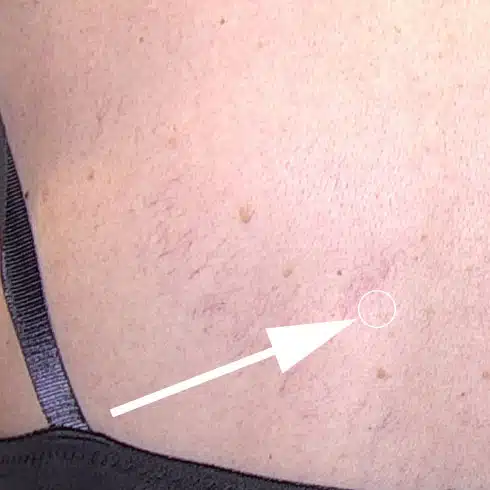
Here you can see a close-up of this malignant melanoma: clearly visible are the irregular border, the asymmetric shape and the uneven pigmentation — typical features of a dangerous skin tumor.
Have you noticed suspicious skin changes? Make an appointment with dermatologist Dr. Tamara Kopp — early detection can save lives!
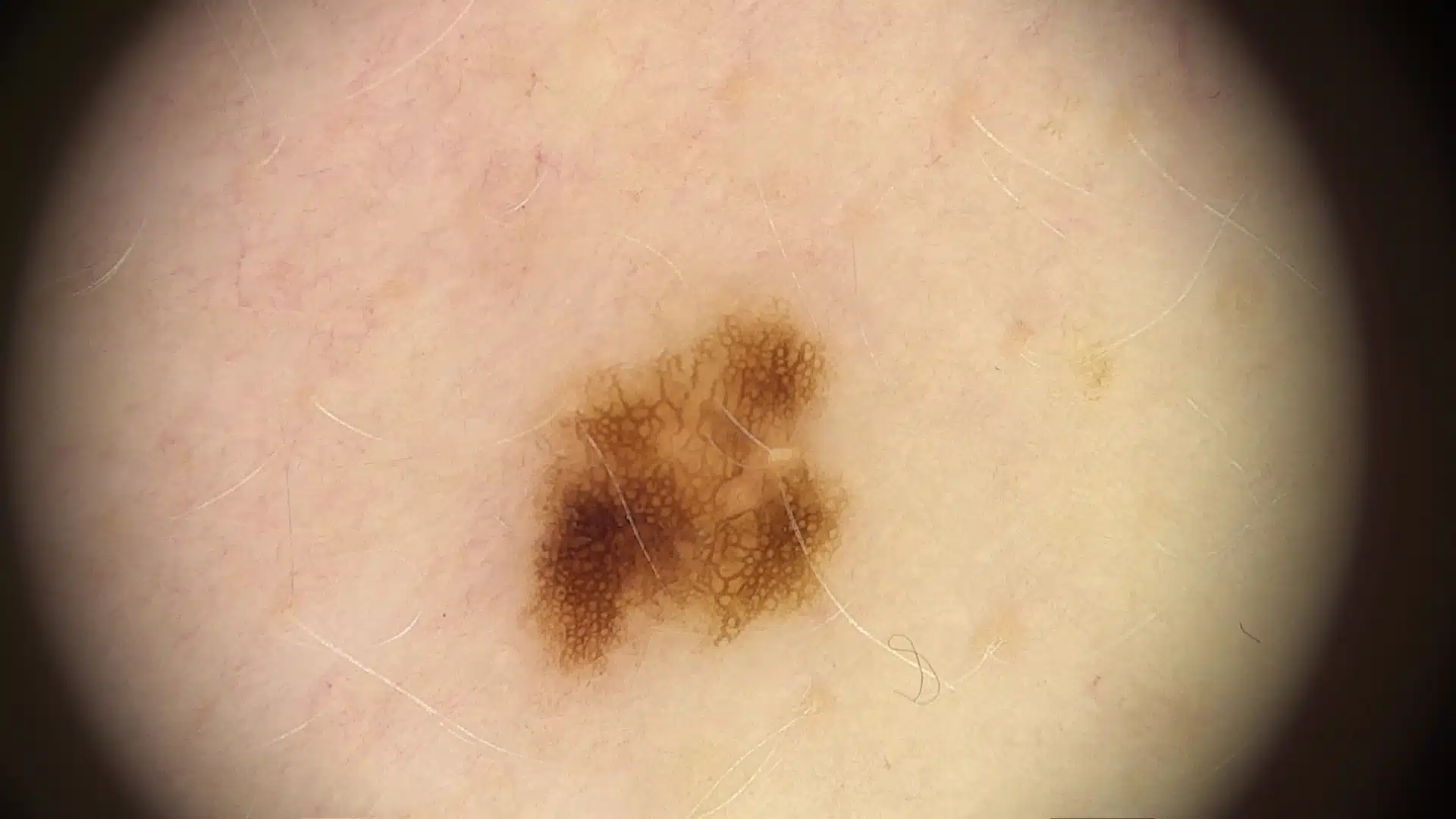
We show you an example with a patient where a melanoma was detected early by dermatologist Dr. Tamara Kopp (see arrow). The suspicion was histologically confirmed after removal.
Keep an eye on your skin — your health matters!
However inconspicuous a skin change may appear at first glance — in magnification the true extent often becomes visible. This image shows a melanoma, a malignant form of skin cancer, in an impressive close-up.
Irregular borders, varying shades and asymmetric shape — all of these are warning signs that should be taken seriously.
Our recommendation: Check your skin regularly and have suspicious spots examined early by a specialist. When detected early, skin cancer is in many cases easily treatable.
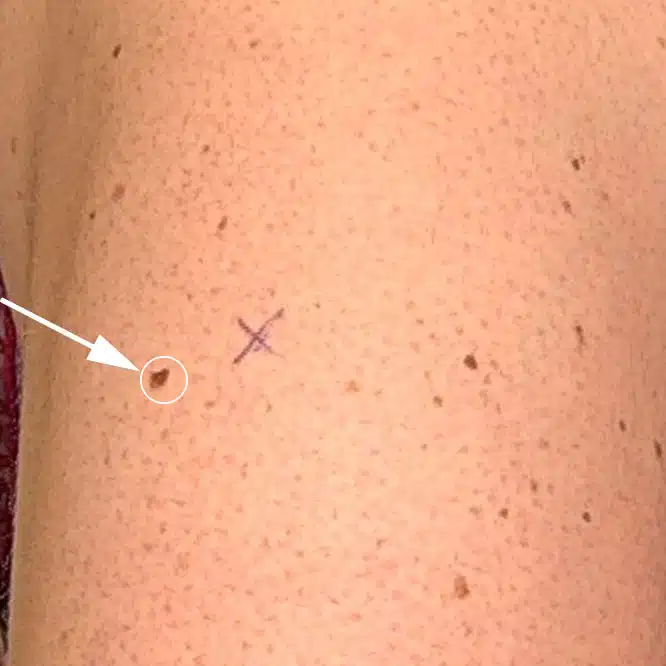
Thanks to the attention and expertise of dermatologist Dr. Tamara Kopp, a melanoma on a patient's leg was recently detected early at our JUVENIS practice. During a routine skin cancer screening Dr. Tamara Kopp discovered a suspicious skin change that the patient had not noticed.
A promptly initiated histological examination confirmed the suspicion: it was an early-stage melanoma. Timely diagnosis and removal prevented spread — the patient has excellent chances of recovery.
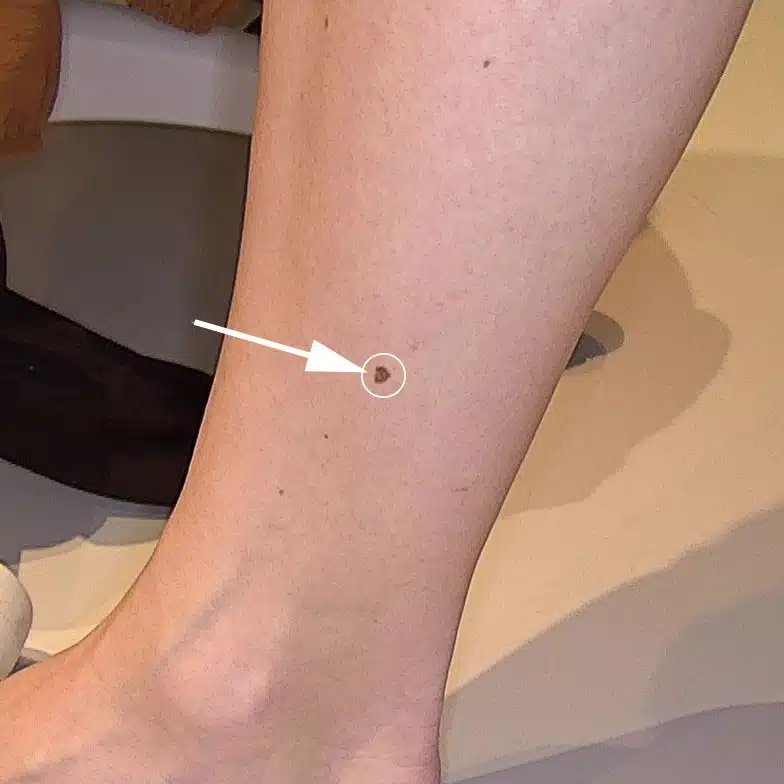
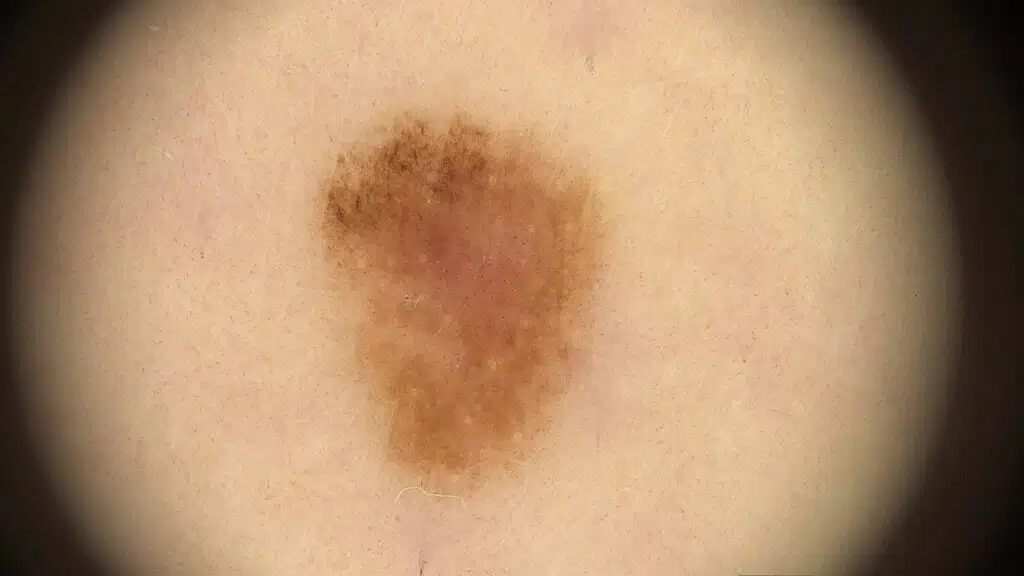
Image 2 shows a highly magnified close-up of the melanoma. If a melanoma is detected while still in an early stage, the chance of complete cure increases. The Treatment of skin cancer and the dermatosurgical removal is performed at JUVENIS by experienced dermatologists.
Our recommendation: Check your skin regularly and have suspicious spots examined early by a specialist. When detected early, skin cancer is in many cases easily treatable.
Dr. Tamara Kopp of JUVENIS recently discovered an early-stage melanoma — a powerful example of the importance of skin cancer screening.
This case once again demonstrates how crucial regular skin cancer screening can be. Early diagnosis can prevent serious consequences — sometimes a single look makes the difference.
Make your preventive appointment with us at the JUVENIS medical center in Vienna today!
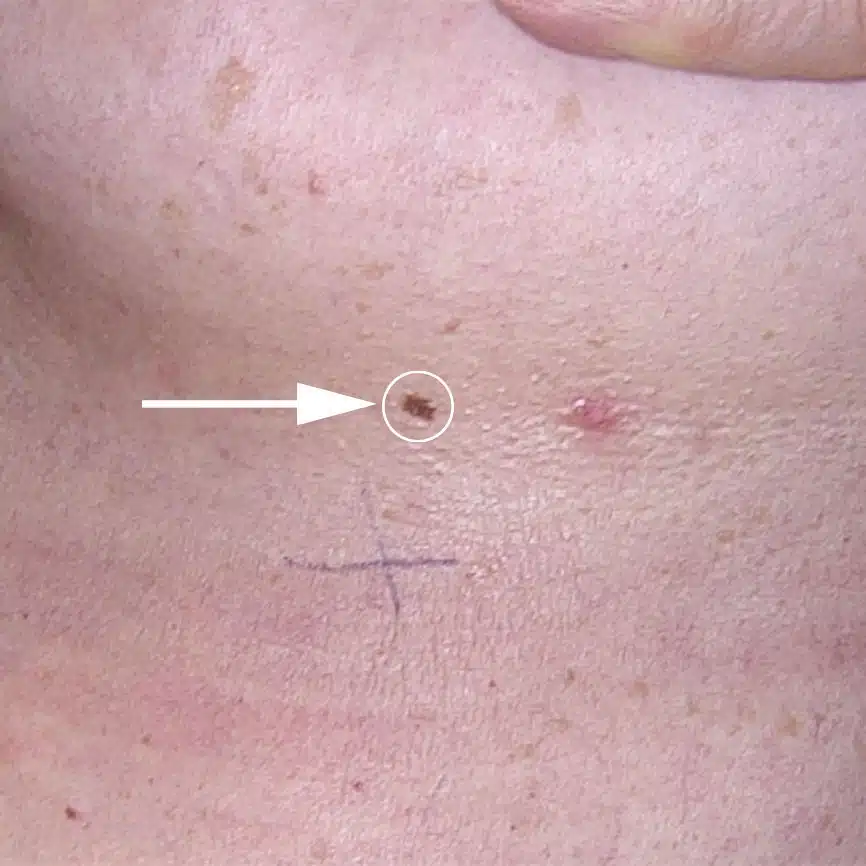
Image 2 shows a highly magnified close-up of the melanoma. If a melanoma is detected while still in an early stage, the chance of complete cure increases. The Treatment of skin cancer and the dermatosurgical removal is performed at JUVENIS by experienced dermatologists.
Our recommendation: Check your skin regularly and have suspicious spots examined early by a specialist. When detected early, skin cancer is in many cases easily treatable.
During a routine examination our experienced dermatologist Dr. Tamara Kopp discovered a suspicious mole — subsequent analysis revealed: melanoma.
Thanks to the early diagnosis and rapid, skin-preserving removal the dangerous skin lesion was completely eliminated.
Regular mole checks are essential because melanomas often remain unnoticed for a long time and can become life-threatening. Book your check-up appointment with Dr. Tamara Kopp now — your skin health is in the best hands with us!
The Treatment of skin cancer and the dermatosurgical removal is performed at JUVENIS by experienced dermatologists.
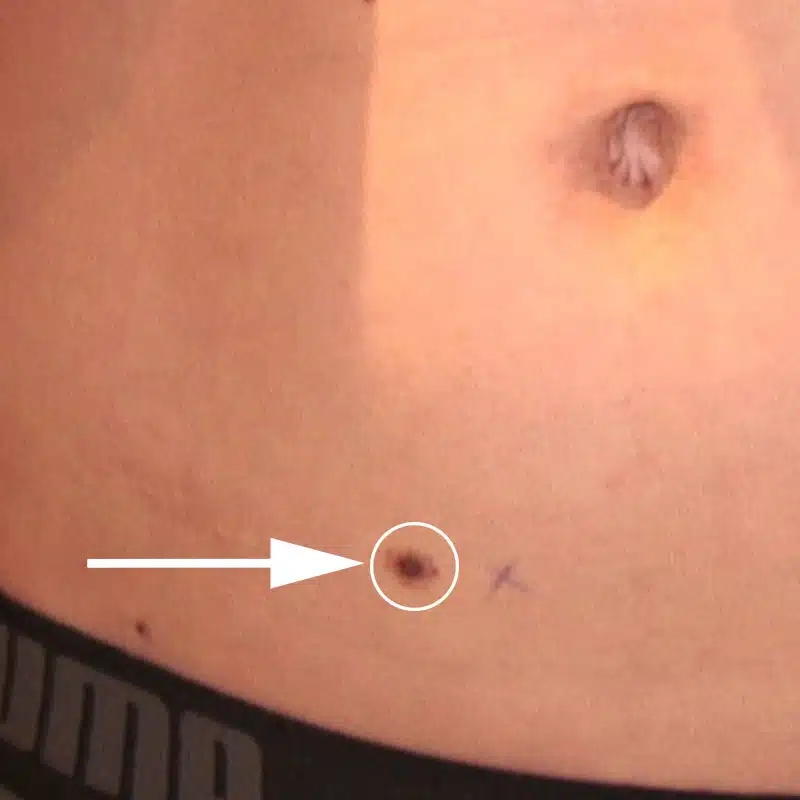
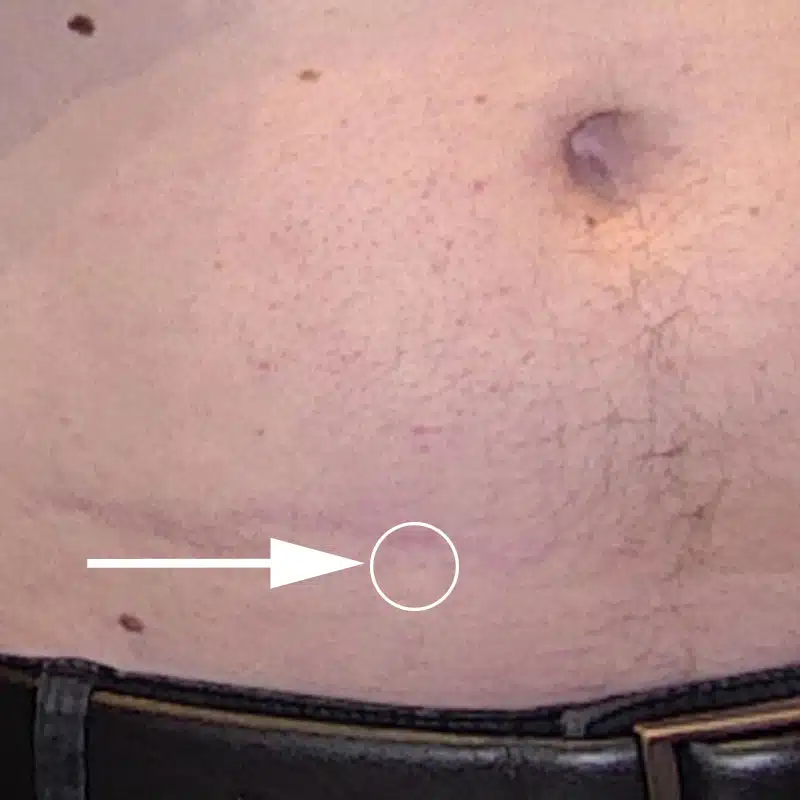
Early detection saves lives!
Dr. Tamara Kopp detected an early-stage melanoma during a routine check and removed it completely. Thanks to her thorough examination and years of experience, the skin cancer was recognized in time.
Have your skin checked regularly — once a year can be decisive.

Macro shot of a melanoma
A highly magnified image (macro shot) of a melanoma impressively shows how varied skin cancer can appear in detail. Under the microscope or in extreme close-up you can see what the naked eye often misses: irregular pigment distributions, fuzzy borders, color gradients from light brown to black and microscopically small changes in the skin structure.
These details are crucial for diagnosis. A melanoma arises from pigment-producing cells (melanocytes) and can — unlike harmless freckles — already form metastases in early stages. Therefore: the earlier a melanoma is detected and removed, the better the chances of cure.
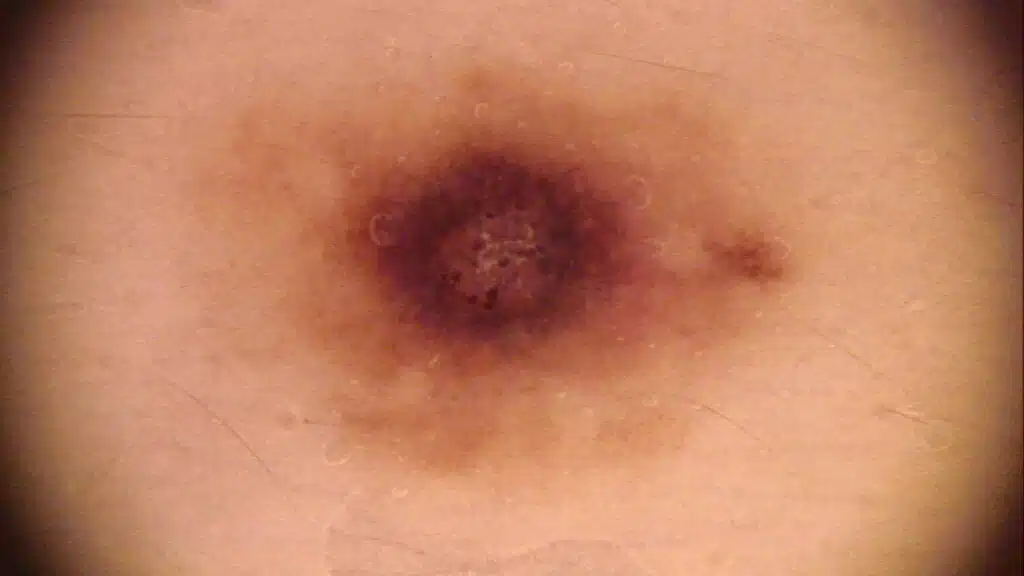
During a routine mole check at JUVENIS a malignant melanoma was detected early by Dr. Tamara Kopp. Thanks to the careful dermatological examination the skin change could be identified quickly and the necessary next steps initiated immediately.
At JUVENIS every mole check is carried out with the highest professional care. Modern examination methods combined with many years of dermatological expertise allow precise assessment of even the smallest changes in the skin.

Highly magnified melanoma in the dermatoscope
The image shows a melanoma under high magnification. Irregular pigment structures, asymmetric boundaries and different shades are typical warning signs. Such changes are often not clearly recognizable with the naked eye — however modern dermatoscopy enables precise assessment.
Detected early, a melanoma is in many cases very well treatable.
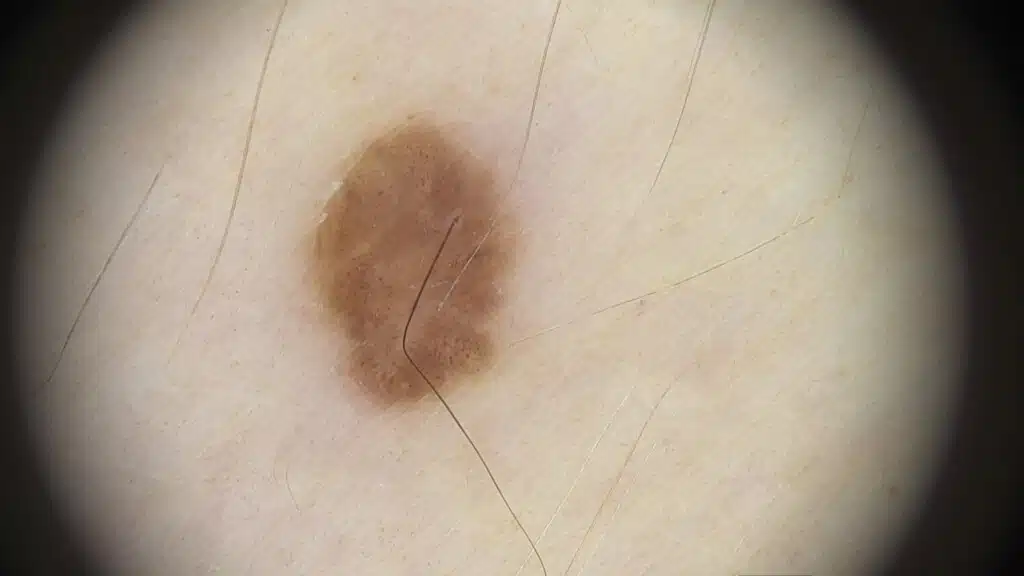
Unremarkable mole with a crucial detail
During a routine mole check at the Vienna private practice JUVENIS, a melanoma was recently detected at an early stage. The examination was performed by the experienced dermatologist Dr. Tamara Kopp, who has specialized in skin cancer screening and modern dermatoscopy for many years.
Malignant melanoma — also known as ‘black skin cancer’ — is one of the most aggressive skin tumors. However, if it is detected at an early stage, the chances of a cure are excellent.
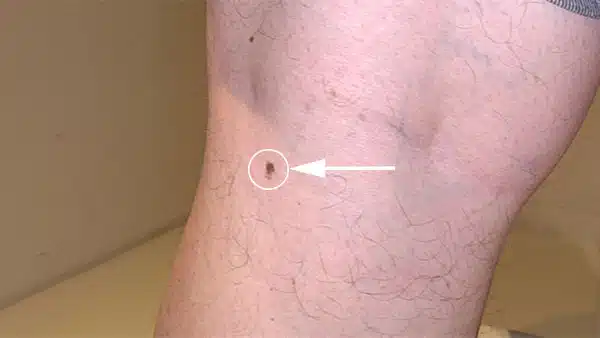
Highly magnified melanoma – why details matter
A highly magnified melanoma often shows typical features that are barely visible to the naked eye. These include irregular pigment distributions, blurred or frayed borders, and asymmetric structures within the mole.
It is precisely these subtle changes that enable dermatologists to distinguish early between benign and malignant skin alterations. Modern dermatoscopy makes such details visible and is a central component of skin cancer screening.
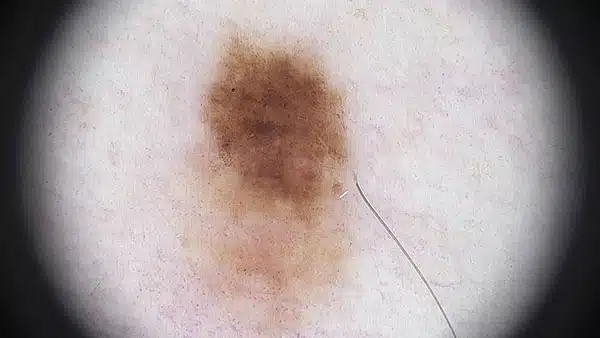
Videos on mole checks – skin cancer screening
In this video you accompany our experienced dermatologist Dr. Tamara Kopp in a particularly important case: during a routine examination she discovers a suspicious mole on a patient. Thanks to her trained expertise and state-of-the-art dermatological technology she can intervene early — and remove the mole safely and in a skin-preserving way.
- Why regular skin cancer screening is so important
- Impressions of how a mole removal is performed
Watch the video now and let Dr. Tamara Kopp inform you.
Skin cancer is one of the most common cancers — but the earlier it is detected, the better the chances of cure. Especially malignant melanoma ("black skin cancer") can become dangerous if it remains undetected.
In this video you will learn:
- why skin cancer screening is vital
- which warning signs you should watch for in moles (ABCDE rule)
- how small and inconspicuous a melanoma can be
Watch the video now and let Dr. Tamara Kopp inform you.
ABCD rule: distinguishing a mole from a melanoma
Dangerous melanomas have typical features that patients can look for during self-examination (ABCD rule). This self-examination should alert you to suspicious lesions. However, it cannot replace the annual Skin cancer screening by the experienced dermatologist.
| Mole characteristic | Mole/Melanoma | Melanoma characteristic |
|---|---|---|
| Asymmetry
round & symmetrical |
  |
irregular shape |
| Bboundary
regular boundary |
  |
irregular rough & jagged boundary |
| Ccolour (color)
consistent dark or light shade |
  |
irregular shade (light & dark) |
| Ddiameter
smaller diameter (<6mm) |
  |
larger diameter (>6mm) |
FAQs
Generally, an annual check-up is recommended. With many moles, fair skin, frequent sun exposure, or a family history, a six-month examination may be advisable.
Our dermatologists carefully examine the entire skin using a dermatoscope. Suspicious moles are digitally documented so changes can be precisely compared over time.
No, the examination is completely painless and usually only takes a few minutes.
If skin cancer or a precursor is suspected, the affected mole is removed and examined histologically (microscopically). This allows the diagnosis to be confirmed and, if necessary, treated at an early stage.
When detected early, skin cancer is usually completely curable. Regular mole checks help to detect dangerous changes in time and thus avoid complications.
In principle, a check from adolescence is advisable—especially for people with many moles or a family history. Children with suspicious moles should also be examined.
Coverage depends on your insurer. JUVENIS is a private practice, but you will receive an invoice that you can submit to your insurance company for partial reimbursement.
You can easily book your appointment online via our website or by phone at +43 1 236 30 20 to schedule.
Skin cancer screening & mole check: Examination of the entire body for suspicious skin changes & sun protection advice costs at JUVENIS from € 190. Additional services (e.g. digital photo documentation: € 30) are billed separately.
At JUVENIS you benefit from the highest dermatological expertise, state-of-the-art technology, and individualized care. Our experienced dermatologists specialize in skin cancer screening and take the time for a thorough full-body examination of your skin.
By using a digital dermatoscope, suspicious moles can be analyzed and documented with millimeter precision. This allows even the smallest changes over time to be detected early—a decisive advantage for the early detection of skin cancer.
At JUVENIS your safety is our priority: we combine medical precision with a compassionate, trustworthy approach so that you feel completely comfortable during the examination.
We have answered the most frequently asked questions on the topic of Mole check answered. If you have any further questions, please feel free to contact us via empfang@juvenismed.at or at +43 1 236 3020.
Testimonials
114 reviews Skin cancer screening & mole check Vienna
Experience report about a mole removal and mole check in ViennaMs. P. (30-40 years): “Empathetic, uncomplicated, quick and skillfully done. It didn't hurt, it [...] |
For empathy 100 stars for Prof. KoppMs. K. (56 years): “great doctor, 100 stars for empathy. As always perfect service, patients' well-being [...] |
Dr. Kopp is a very friendly and competent physicianMs. K. (24 years old): “Mole check. Dr. Kopp is a very friendly and competent doctor. [...] |
Related blog posts

Mole check after the summer: Why now is the right time for a skin check
Summer, sun and holidays often mean increased strain on our skin from UV radiation. Even with consistent sun protection, the skin accumulates sun exposure over the warm months. The start of autumn is therefore a good time, [...]
A mole itches or changes – what to do?
Moles are part of the normal skin appearance for many people. Most are harmless and change little over the years. But what does it mean if a mole suddenly itches, grows, or changes its color? Such changes should [...]

Applying sunscreen correctly: The most common mistakes
Sun protection is one of the most important measures for healthy skin. Nevertheless, many people make mistakes in everyday life that can significantly reduce the protective effect. The consequence: sunburn, pigment spots, premature skin aging and an increased risk of skin cancer. [...]
Team




Contact
Responsible for the content of this page: a.o. Univ. Prof. Dr. med. Tamara Kopp, OÄ Dr. med. Christine Bangert, OÄ. Dr. med. Elli Katherina Greisenegger, OÄ Dr. med. Tamara Arnoldner