 JUVENIS Vouchers
 JUVENIS Vouchers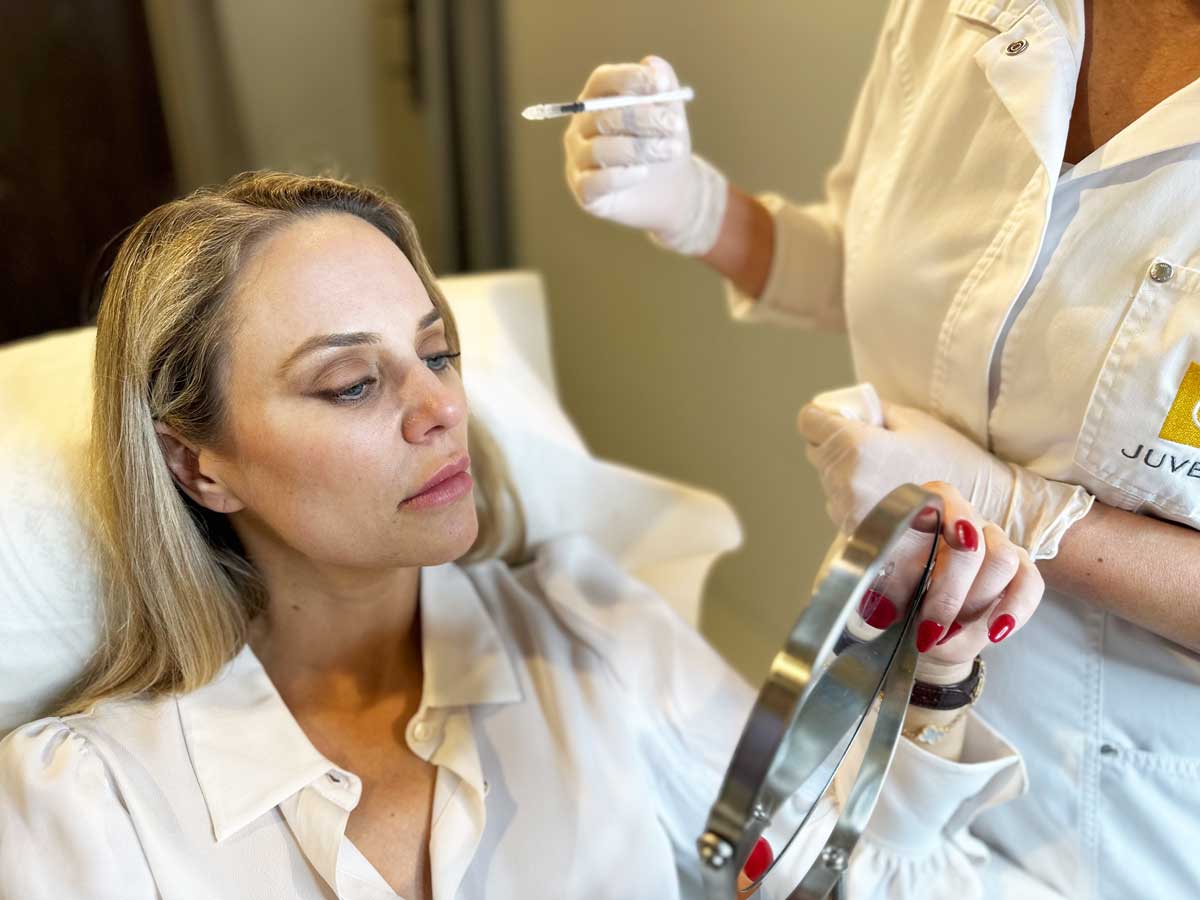
Anyone who looks into aesthetic treatments quickly comes across two terms: Botox and Hyaluron. Both procedures are among the most popular treatments in modern aesthetic medicine – however, they have different modes of action and areas of application.
But when is Botox appropriate, when Hyaluron, and when is a combination sensible? At JUVENIS in Vienna we advise our patients individually to find the right treatment for a natural result.
Botox and Hyaluron – what's the difference?
Although both treatments are often compared, they pursue different goals.
- Botox (botulinum toxin) relaxes specific facial muscles in a targeted way. This can smooth expression lines.
- Hyaluronic acid on the other hand, is a natural component of the body and serves to build volume, retain moisture, and harmonize facial contours.
When is Botox the right choice?
Botox is particularly suitable for so-called dynamic (expression) wrinkles that are caused by repeated muscle movements.
These include:
- Forehead wrinkles
- frown line
- crow's feet
By selectively relaxing the muscles, the face looks fresher and more relaxed without completely altering the natural facial expressions.
When is hyaluronic acid suitable?
Hyaluronic acid is used when volume needs to be added or contours need to be improved.
Common treatment areas include:
- Lips
- Cheeks
- Chin
- Jawline
- Nasolabial folds
- Marionette lines
In addition, hyaluronic acid provides moisture and can make the skin look fresher.
Botox or hyaluronic acid for forehead wrinkles?
Forehead wrinkles are primarily caused by facial expressions. That is why Botox is often the preferred treatment. If volume has also been lost, a combination with hyaluronic acid can be useful in certain cases.
What helps against nasolabial folds?
Nasolabial folds are usually caused by the natural loss of volume in the face. Hyaluronic acid is often used here to gently balance facial proportions and soften the wrinkles.
Can Botox and hyaluronic acid be combined?
Yes. Often, it is the combination of both procedures that leads to particularly harmonious results. While Botox reduces expression lines, hyaluronic acid can compensate for lost volume and define contours.
This combination is often referred to as a full-face approach and aims for an overall fresh and natural appearance.
How long do the results last?
The durability depends on various factors.
- Botox is effective for about 3 to 6 months.
- Hyaluron lasts – depending on the treatment area and metabolism – usually 6 to 12 months, sometimes longer.
Regular touch-ups can help maintain the result in the long term.
Which treatment looks more natural?
This question is asked frequently. In fact, the following applies:
It is not the treatment that determines naturalness, but the correct indication, dosage, and experience of the treating physician.
Modern aesthetic medicine aims to preserve individual radiance and achieve natural results – not to change the face.
Botox or Hyaluronic Acid at JUVENIS in Vienna
At JUVENIS in Vienna, every aesthetic treatment begins with a detailed consultation. During this process, facial proportions, skin quality, and personal wishes are analyzed in order to create an individual treatment concept.
Depending on the initial situation, Botox, Hyaluron, or a combination of both methods may be recommended.
Conclusion
Botox and Hyaluron are not opposites, but complement each other perfectly. While Botox primarily treats dynamic facial wrinkles, Hyaluron provides more volume, defined contours, and intense hydration.
Which treatment is right depends on your individual needs and your skin condition. A personal consultation with experienced female and male physicians is the best way to achieve a natural and harmonious result.
JUVENIS in Vienna offers services related to Health & preventive care, Radiance & posture as well as Outer beauty that make you outwardly radiant and enhance your well-being.
Contact us, we will be happy to inform you!