 JUVENIS Vouchers

 JUVENIS Vouchers
A mole changes color, a new dark spot appears, or a skin area does not heal for an extended period: such changes are easily overlooked in everyday life. Early detection of skin cancer can be decisive for treatment success. Skin cancer screening and regular mole checks are therefore important measures in dermatological preventive care. The earlier a suspicious skin change is detected, the better the treatment options often are.
At JUVENIS in Vienna, careful dermatological examination of the skin is central in order to detect suspicious changes as early as possible and, if necessary, initiate further investigations.
Why is skin cancer screening so important?
Skin cancer is one of the common types of cancer. In particular, long-term exposure to UV radiation plays an important role in its development.
There are generally different types of skin cancer:
- Malignant melanoma (black skin cancer): Can develop from existing moles or on previously unremarkable skin. It can form metastases at an early stage and is therefore particularly dangerous.
- Basal cell carcinoma (white skin cancer): Usually grows slowly and very rarely forms metastases. However, if left untreated it can destroy surrounding tissue.
- Squamous cell carcinoma: Often develops on chronically sun-damaged skin and can also metastasize in advanced cases.
Many forms of skin cancer can be treated effectively if diagnosed early. Therefore, it is important not to ignore suspicious changes.
Why can a regular mole check save lives?
The timing of diagnosis is particularly crucial for malignant melanoma. If a melanoma is detected while it is still thin and confined to the skin, there are often very good chances of cure. If the disease progresses, the risk increases that cancer cells will spread via the lymphatic system or bloodstream. A professional skin examination can help detect suspicious changes at an early stage.
Important: A regular mole check can help with early detection, but it does not provide absolute certainty. How often a skin check is advisable depends on individual skin cancer risk. For many patients, an annual check is a practical screening interval; with elevated risk, shorter intervals may be required.
Which moles are suspicious? The ABCDE rule
An important guideline for self-examination is the so-called ABCDE rule.
A – Asymmetry
A mole is irregularly shaped and its two halves differ markedly from one another.
B – Border
The edges appear irregular, blurred, frayed, or jagged.
C – Color
The mole displays varying shades or changes its color. For example, multiple brown, black, red, or other tones within a skin lesion may be noticeable.
D – Diameter
A diameter of more than about six millimeters can be a sign to take a closer look. However, smaller skin changes can also be malignant.
E – Evolution
Change over time is particularly important. If a mole grows, changes its shape or color, or new symptoms appear, it should be examined by a dermatologist.
Not every suspicious mole is skin cancer. Conversely, not every skin cancer meets all the ABCDE criteria.
The ugly duckling sign: when a mole looks different
In addition to the ABCDE rule, there is another important clue: the so-called ugly duckling sign. In many people, existing moles resemble each other in color, shape, and size. A mole that looks clearly different from all the others should therefore receive special attention. This comparison can be particularly helpful for people with numerous moles.
What happens during a mole check at the dermatologist?
During a professional mole check at JUVENIS in Vienna, the skin is systematically examined for suspicious changes. Not only are previously known moles assessed, but other skin changes are also taken into account.
Special attention is paid, for example, to:
- suspicious pigmented spots
- new moles
- changes to existing moles
- unusual skin nodules
- non-healing skin lesions
- concerning changes in areas of the body that are difficult to inspect
Dermatoscopy: Examining moles more closely
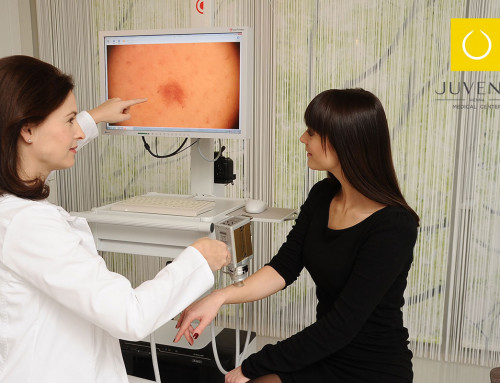
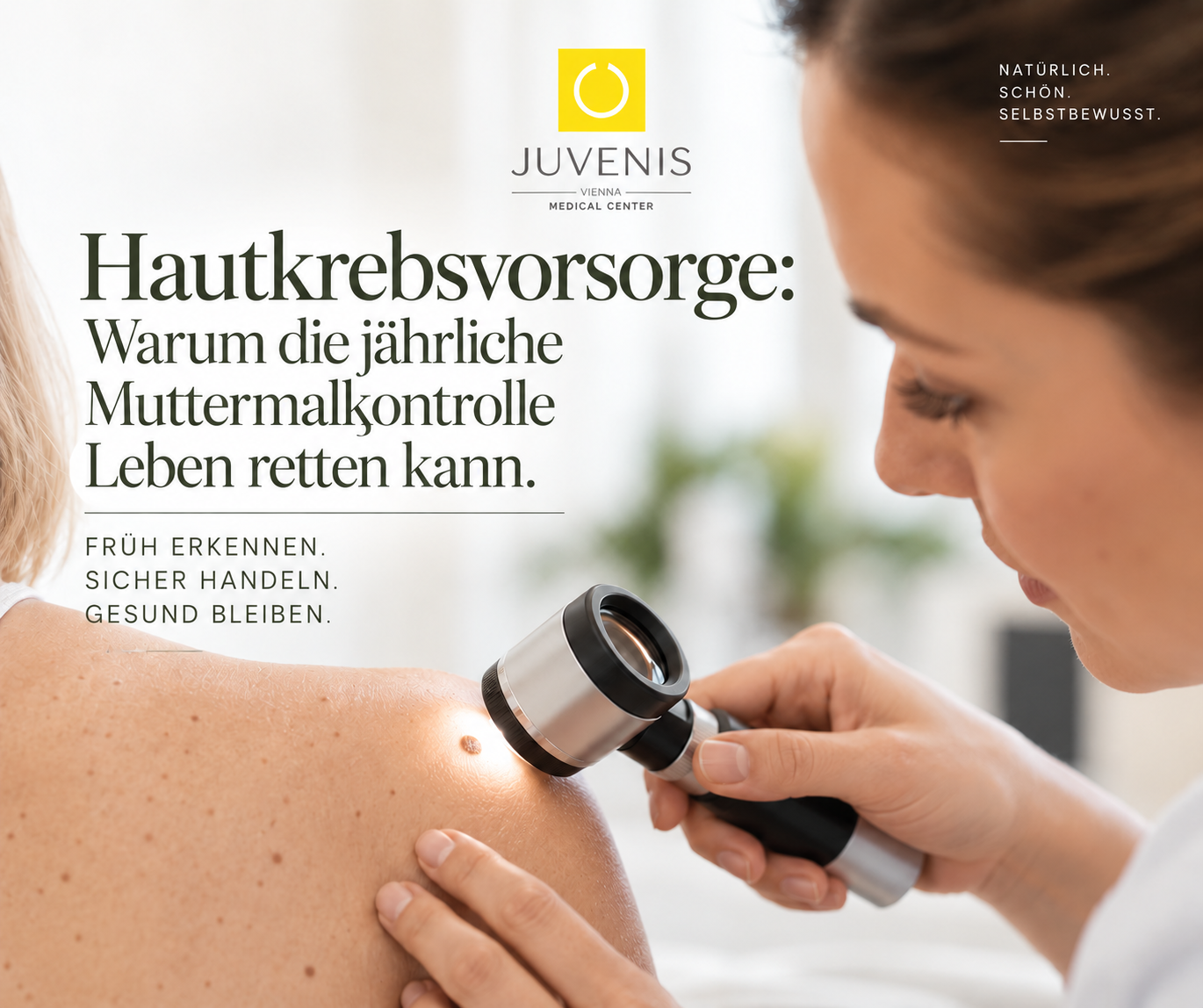
In dermatoscopy, the dermatologist uses a special examination device called a dermatoscope. This allows skin structures to be viewed at high magnification that are not sufficiently visible to the naked eye. The examination is non-invasive and usually painless. By more closely assessing pigment patterns, vessels and other features, suspicious skin changes can be better evaluated.
Digital mole monitoring and follow-up
In people with numerous moles or an increased risk of skin cancer, digital documentation can be useful. Selected moles are photographed and compared with earlier images during later examinations. This makes it possible to detect changes in size, shape, color or structure over time more precisely. Whether digital follow-up monitoring is appropriate is decided on an individual basis.
Who should have skin cancer screenings more regularly?
The following factors can particularly increase the risk of skin cancer:
- very fair skin and high sun sensitivity
- numerous moles
- suspicious or atypical moles
- frequent sunburns, especially in childhood and adolescence
- a personal history of skin cancer
- melanomas in close family members
- high UV exposure from work or recreational activities
- a weakened immune system or certain immunosuppressive therapies
How often an examination is necessary should be determined by a physician based on individual risk factors.
Skin cancer does not only develop on sun-exposed areas
Skin cancer can also develop on parts of the body that are rarely or barely exposed to direct sunlight.
These include, for example:
- Scalp
- Back
- Soles of feet
- spaces between the toes
- Areas under the nails
- other hard-to-see skin areas
Therefore, examining the entire skin is important, not just checking individual suspicious moles.
How often should you have moles checked?
A common recommendation is to have your skin examined regularly by a dermatologist. For many people, an annual mole check can be appropriate. If the risk of skin cancer is increased, shorter check-up intervals may be necessary. At low risk, the individually recommended interval may be different. The crucial point is that preventive care is tailored to your skin type, the number and characteristics of your moles, and any possible risk factors.
What can you do yourself to help prevent skin cancer?
In addition to professional skin checks, regularly observing your own skin plays an important role.
Check your own skin
Watch for new or changing areas of skin. It is especially helpful to know your skin well so you can notice changes more easily. For hard-to-see areas, a mirror or the help of a trusted person can be useful.
Consistent sun protection
UV radiation is one of the most important modifiable risk factors for skin cancer. Therefore, the following measures should be standard practice:
- Use sunscreen with a high SPF
- Avoid intense midday sun whenever possible
- Wear protective clothing and headwear
- avoid sunburns
- Avoid tanning beds
Do not ignore changes
If a mole suddenly grows, bleeds, itches, or visibly changes, you should not wait until the next routine screening appointment. A timely dermatological evaluation is particularly important in that case.
Skin cancer screening after summer: A good time for a skin check
After the summer months, it's especially worthwhile to pay attention to your skin. Holidays, outdoor sports, and extended periods outdoors can be associated with increased UV exposure. Autumn therefore provides a good opportunity to have your skin examined by a dermatologist.
However, it is important to note: skin cancer screening is not tied to a specific season. Suspicious skin changes should be examined regardless of the season.
Skin cancer screening and mole checks at JUVENIS in Vienna
At JUVENIS in Vienna, early detection of noticeable skin changes is the focus of dermatological preventive care. As part of a professional mole check, the skin is examined carefully. Conspicuous pigment changes and moles can be evaluated more precisely using dermatoscopy. Depending on the individual findings, it will be decided whether further observation, follow-up monitoring, or additional medical evaluation is required. Regular dermatological care is particularly advisable for those with numerous moles, a family history, or intense UV exposure.
Schedule your skin cancer screening appointment at JUVENIS in Vienna and have your skin professionally examined.
Conclusion: Detected early, more treatable
Skin cancer can develop unnoticed over a long period. Especially in the case of malignant melanoma, as early a diagnosis as possible is decisive for the prognosis. Regular mole checks, observing your own skin and consistent sun protection are important components of skin cancer screening. An annual examination can be a sensible routine for many people. However, which screening interval is personally appropriate should be determined individually with your dermatologist.
Because skin cancer screening means recognizing changes as early as possible — before they become a serious health risk.
JUVENIS in Vienna offers services related to Health & preventive care, Radiance & posture as well as Outer beauty that make you outwardly radiant and enhance your well-being.
Contact us, we will be happy to inform you!