 JUVENIS Vouchers

 JUVENIS Vouchers

Fine red, blue, or purple veins on the legs are considered bothersome by many people. These so-called spider veins are widespread and often appear on the thighs, calves, or behind the knees. Although they are usually harmless, many people affected wish for a more even skin appearance.
But which treatment works better – laser or sclerotherapy?
At JUVENIS in Vienna, modern methods are available to specifically treat spider veins and visibly improve the appearance of the skin.
What are spider veins?
Spider veins are small, superficial dilations of the veins directly under the skin. They arise from a weakness in the vein walls or in the connective tissue.
Possible risk factors include:
- genetic predisposition
- prolonged standing or sitting
- hormonelle Veränderungen
- pregnancy
- increasing age
In many cases spider veins are a cosmetic issue, but they can sometimes also indicate venous insufficiency.
When should spider veins be examined?
A medical evaluation is advisable before treatment – especially in the following cases:
- heavy or swollen legs
- pain or a feeling of tension
- visible varicose veins
- rapidly progressing vascular changes
This can rule out the presence of a deeper venous disease.
Removing spider veins: Which methods are available?
Laser treatment for spider veins
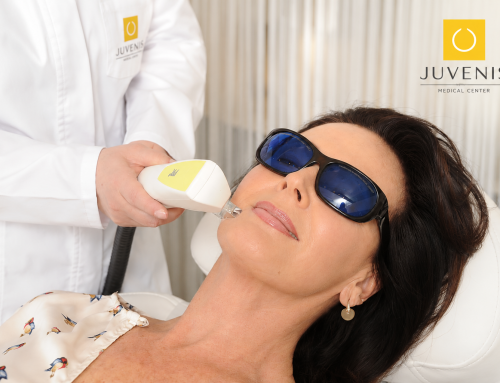
Laser therapy is particularly suitable for fine, superficial vessels. The laser delivers targeted energy, causing the small vessels to close.
Advantages of laser treatment:
- particularly suitable for fine vessels
- no injections necessary
- precise treatment of small areas
The skin may be temporarily slightly reddened after treatment.
Sclerotherapy (sclerosing)
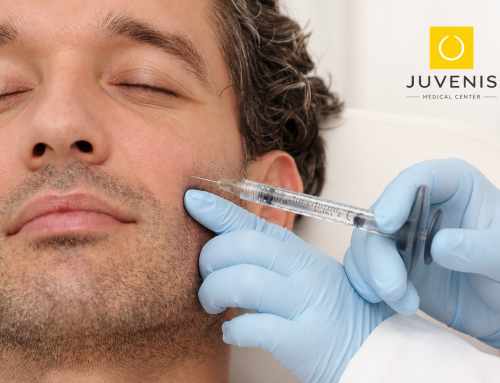
In sclerotherapy, a special medication is injected directly into the affected vessels. This causes the vessel walls to stick together, and the spider veins are gradually broken down by the body.
Sclerotherapy is often particularly suitable for:
- larger spider veins
- bluish vessels
- more extensive vascular networks
Laser or sclerotherapy – which is better?
The appropriate method depends on several factors:
- Size and depth of the vessels
- Hauttyp
- Location of the spider veins
- individual skin and vein condition
In many cases, a combination of both methods can also be useful.
How many treatments are necessary?
Depending on the extent of the spider veins, several sessions are often necessary to achieve an optimal result.
The treated vessels usually disappear gradually over several weeks.
Can spider veins return?
New spider veins can develop again over time, especially with a genetic predisposition. Exercise, vein health, and a healthy lifestyle can help reduce the risk.
Spider vein treatment at JUVENIS in Vienna
At JUVENIS in Vienna, a detailed analysis of the vessels and each individual's skin condition is performed before every treatment. The goal is a gentle and effective treatment for a more even skin appearance.
On our website you can find more information and prices here:Spider vein removal in Vienna
Conclusion
Both laser therapy and sclerotherapy can effectively treat spider veins. Which method is appropriate depends on the type of vessels and the individual situation.
A professional dermatological consultation helps identify the right treatment for natural and aesthetic results.
JUVENIS in Vienna offers services related to Health & preventive care, Radiance & posture as well as Outer beauty that make you outwardly radiant and enhance your well-being.
Contact us, we will be happy to inform you!