 JUVENIS Vouchers

 JUVENIS Vouchers
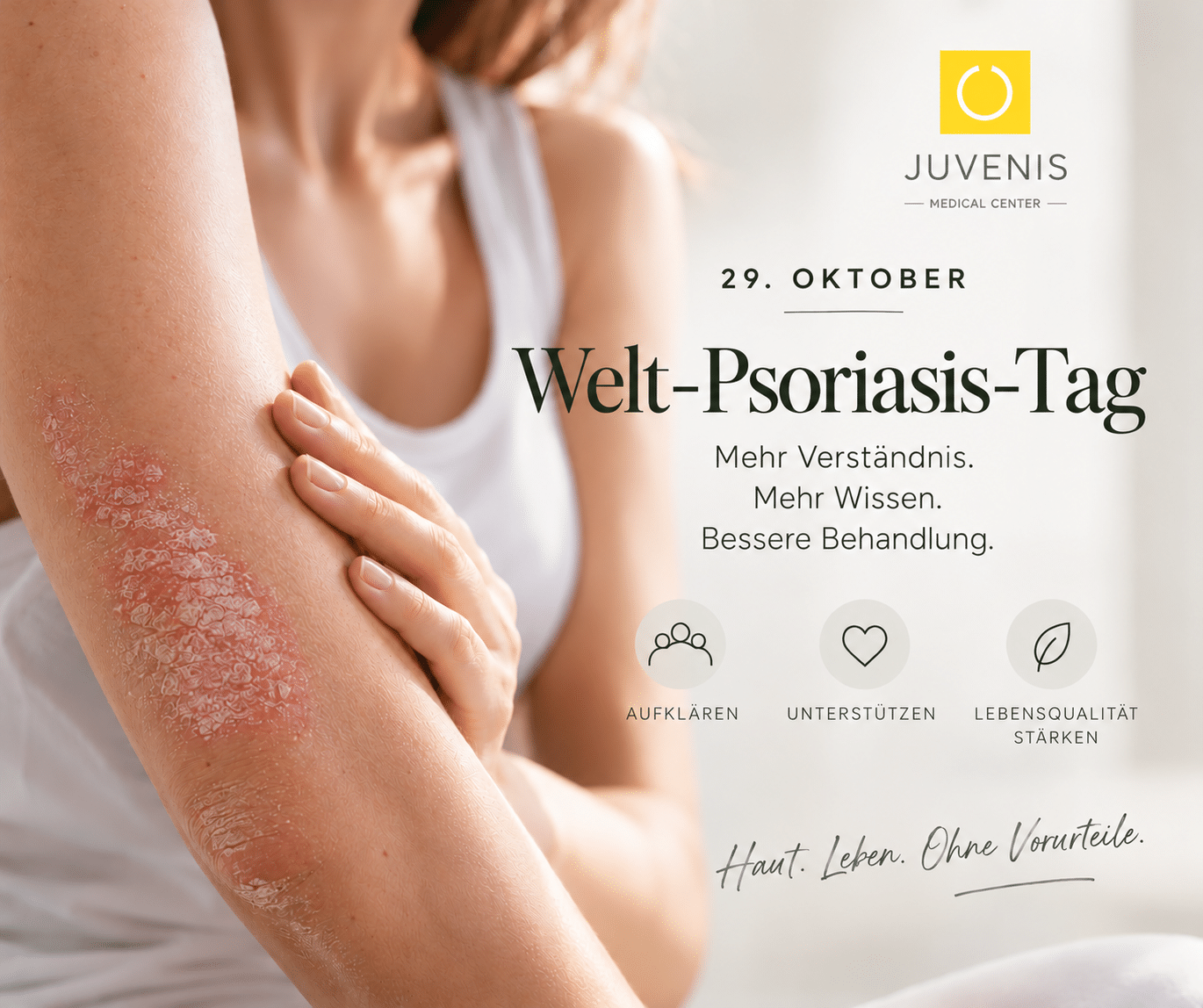
Reddish, scaly patches, persistent itching and inflamed skin: For people with psoriasis, also known as plaque psoriasis, these complaints are often part of everyday life. But the chronic inflammatory disease affects far more than just the skin. World Psoriasis Day takes place on 29 October 2026. The international day of action aims to raise awareness of psoriasis, inform about modern treatment options and draw attention to the physical and psychological burdens faced by those affected. Although psoriasis is not contagious, many patients still experience insecurity, prejudice and limitations in everyday life.
At JUVENIS in Vienna, dermatological evaluation and individually tailored treatment of psoriasis are the focus.
What is psoriasis (plaque psoriasis)?
Psoriasis is a chronic, immune-mediated inflammatory disease. It involves a dysregulation of the immune system, which triggers inflammatory processes in the skin. Skin cells renew much faster than usual. This leads to the typical thickened, scaly and inflamed skin patches.
Common symptoms include:
- Reddish, clearly defined patches
- Whitish-silvery scales
- Itching and burning
- Dry, sometimes painful skin
- Cracks and minor bleeding
- Changes to fingernails or toenails
Psoriasis often runs in flare-ups. Periods with more severe symptoms can alternate with times when the skin appears largely normal.
Where does psoriasis most commonly occur?
Psoriasis can occur on almost any part of the body.
Commonly affected areas are:
- Elbows
- Knees
- Scalp
- Back and torso
- Hands and feet
- Nails
Sensitive areas such as skin folds or the genital region can also be affected. The condition can vary greatly in severity – from a few small patches of skin to widespread inflammation.
Is psoriasis contagious?
No. Psoriasis is not contagious.
The condition is not transmitted by touch, shared towels, or everyday physical contact. Nevertheless, many people affected face prejudice, especially when the skin changes occur on visible parts of the body. World Psoriasis Day therefore also aims to promote greater understanding and an open approach to the condition.
What causes psoriasis?
The development of psoriasis is complex. Genetic predisposition and a dysregulation of the immune system play an important role. Certain factors can trigger flare-ups or worsen existing symptoms.
These include, for example:
- Psychological stress
- infections
- Injuries or irritations to the skin
- Certain medications
- Smoking
- Excessive alcohol consumption
Not every trigger affects all people in the same way. Therefore, it makes sense to identify possible personal triggers.
Psoriasis affects more than just the skin
One particularly important aspect: psoriasis is not exclusively a cosmetic skin condition. The chronic inflammatory processes can be associated with other conditions.
Psoriatic arthritis: when the joints are also affected
In some people with psoriasis, a condition called psoriatic arthritis develops. It is an inflammatory joint disease that can, among other things, cause the following symptoms:
- Joint pain
- Swelling
- Morning stiffness
- Pain at tendon insertions
- Swollen fingers or toes
Such symptoms should be medically evaluated early, as timely treatment can help prevent permanent joint damage.
Other possible comorbidities
Psoriasis may also be associated with an increased risk of certain comorbidities.
These include, for example:
- Cardiovascular diseases
- High blood pressure
- Diabetes mellitus
- Metabolic disorders
- Depression and anxiety disorders
Comprehensive care therefore takes into account not only the visible skin changes but also the overall state of health.
What modern treatment options are available for psoriasis?
Psoriasis is currently not permanently curable. However, modern therapies can often significantly reduce symptoms and enable many affected individuals to achieve largely lesion-free skin. Which treatment is suitable depends, among other things, on the severity, the areas of the body affected, comorbidities, and previous treatments.
Topical treatment with creams and ointments
In mild psoriasis, topical medications are often used.
These include, for example:
- Corticosteroid preparations
- Vitamin D analogues
- Combinations of different active ingredients
- Lipid-replenishing and moisturizing care products
The treatment is intended to reduce inflammation, alleviate scaling, and support the skin barrier. Regular basic care is an important component of the therapy.
Light therapy for psoriasis
In certain forms of psoriasis, medical light therapy can be appropriate. A controlled UVB exposure is used particularly often. This can reduce inflammatory processes in the skin and affect excessive cell proliferation. The treatment is carried out under medical supervision and differs significantly from a visit to a tanning salon.
Systemic therapies for moderate to severe psoriasis
If larger areas of skin are affected or local treatments are not sufficiently effective, medications that act throughout the body can be used. These include conventional systemic drugs as well as modern targeted therapies. Which treatment is suitable is decided individually based on the course of the disease and any comorbidities.
Biologics: Modern therapy for psoriasis
A major advance in the treatment of psoriasis is the so-called biologics. These are biotechnologically manufactured drugs that specifically interfere with certain inflammatory signaling pathways of the immune system.
Depending on the preparation, for example, the following signaling molecules are inhibited:
- TNF-alpha
- Interleukin-17 (IL-17)
- Interleukin-23 (IL-23)
By specifically inhibiting inflammatory processes, a significant improvement in skin appearance can be achieved for many patients. With the appropriate indication, near-complete or complete clearance of symptoms is sometimes even possible. Biologics are used in particular for moderate to severe psoriasis when the medical requirements are met. Before starting such treatment, appropriate examinations are necessary. Regular medical check-ups also take place during therapy.
IL-23 blockade for psoriasis: Excellent research at JUVENIS
An important advance in modern psoriasis therapy is the targeted blockade of the pro-inflammatory messenger substance interleukin-23 (IL-23). This plays an essential role in the development and maintenance of inflammatory processes in psoriasis. A clinical study by Assoc. Prof. Dr. Tamara Kopp and Dr. Christine Bangert showed that the targeted inhibition of IL-23 can significantly improve skin symptoms in psoriasis.
For their scientific work, Dr. Tamara Kopp were awarded the renowned Heinrich Auspitz Prize. The research underscores their particular expertise in the field of psoriasis and modern immunological therapeutic approaches.
Today, IL-23 inhibitors are among the established modern treatment options for moderate to severe plaque psoriasis. They act specifically on inflammatory signaling pathways and can enable a significant and long-lasting improvement in the skin condition for many patients. The scientific work of Dr. Kopp and Dr. Bangert illustrates how important the investigation of immunological mechanisms is for the development of effective psoriasis therapies.
How important is proper skin care in psoriasis?
In addition to medical treatment, appropriate skin care plays an important role. Psoriatic skin is often dry, sensitive and irritated.
May be helpful:
- Mild, minimally irritating cleansing products
- Regular emollient care
- Moisturizing ingredients
- Avoidance of aggressive exfoliants
- Protection against mechanical irritation
Skincare should be tailored to the individual's skin condition. However, it is important to note: skincare alone does not replace anti-inflammatory medical therapy in severe psoriasis.
What can people affected do themselves?
A healthy lifestyle can support medical treatment.
These include:
- Regular physical activity
- Balanced diet
- Minimize alcohol consumption
- avoiding smoking
- Stress management
- Sufficient sleep
- Consistent adherence to the prescribed therapy
There is no specific diet that reliably improves psoriasis in all affected individuals. What is crucial is a long-term, individually tailored approach to managing the condition.
Why is early dermatological treatment important?
Psoriasis can significantly impair quality of life. In addition to visible skin changes, itching, pain and sleep problems can make everyday life more difficult. An early dermatological assessment helps to properly classify the condition and initiate an appropriate therapy. Possible comorbidities can also be detected earlier as a result.
Psoriasis treatment at JUVENIS in Vienna
At JUVENIS in Vienna, psoriasis is assessed and treated dermatologically on an individual basis. The focus is on an accurate diagnosis, assessment of severity and selection of an appropriate therapy. Depending on the findings, different treatment approaches may be considered — from topical anti-inflammatory agents to modern systemic therapies and biologics. Particular attention is also paid to possible comorbidities and the effects of psoriasis on quality of life. The goal is long-term control of inflammation, reduction of symptoms and a lasting improvement in skin condition.
World Psoriasis Day 2026: More awareness for psoriasis
World Psoriasis Day on October 29 serves as a reminder that psoriasis is much more than a visible skin change. The condition can be physically and psychologically burdensome, but thanks to modern medical treatment options it is often well controlled today. The campaign day aims to encourage those affected to take their symptoms seriously, seek medical advice and learn about modern treatment options.
Conclusion: Psoriasis is treatable
Psoriasis is a chronic inflammatory disease that can extend far beyond the skin. Although the condition is not currently curable, modern therapies now offer good ways to reduce inflammation and significantly improve quality of life. Targeted medications such as biologics have substantially expanded the treatment options for moderate to severe psoriasis. Anyone suffering from recurring scaly, reddened, or inflamed skin areas should have them evaluated by a dermatologist.
At JUVENIS in Vienna, personalized consultation and modern dermatological treatment options are the focus.
Further information about treatment for psoriasis – plaque psoriasis can be found on our website here:Plaque psoriasis – Psoriasis treatment
JUVENIS in Vienna offers services related to Health & preventive care, Radiance & posture as well as Outer beauty that make you outwardly radiant and enhance your well-being.
Contact us, we will be happy to inform you!