 JUVENIS Vouchers

 JUVENIS Vouchers
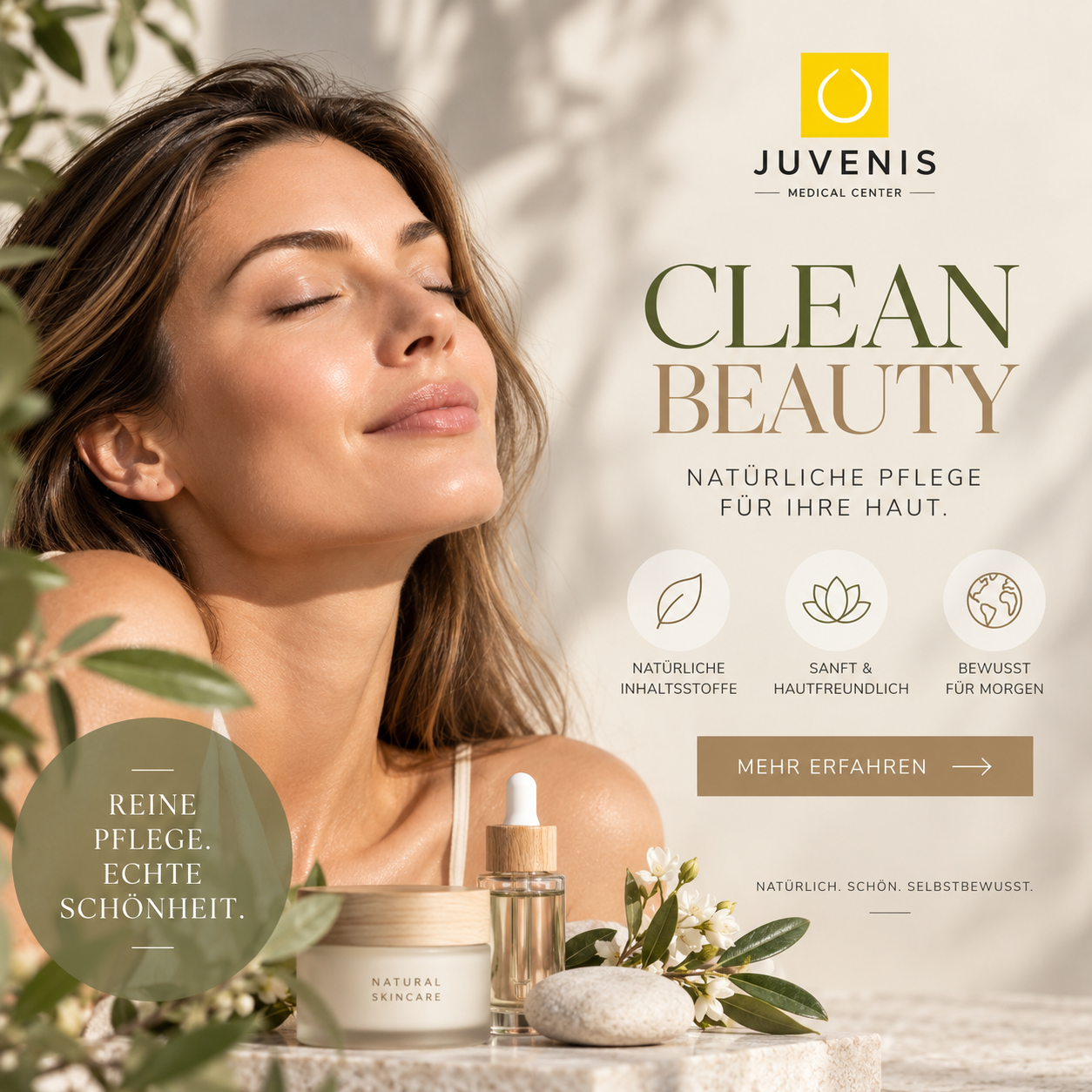
Natural cosmetics, Clean Beauty, medical skincare or dermocosmetics – anyone dealing with skincare today is faced with a huge range of options. While clean beauty products often promote natural ingredients, sustainability and the omission of certain substances, medically oriented skincare relies primarily on specifically selected active ingredients and dermatological findings. But what is really better for the skin: Clean Beauty or medical skincare? And what should you look for with sensitive skin, acne, rosacea or the first signs of skin aging?
The answer is less clear-cut than many advertising claims might suggest. What matters is not whether a product is labeled “clean”, “natural” or “medical”, but which ingredients it contains, how well they are tolerated and whether they suit the individual skin condition.
What does Clean Beauty actually mean?
The term Clean Beauty has developed into an important trend in the cosmetics industry in recent years. It usually refers to skincare products that omit certain ingredients or place a particular emphasis on transparency, sustainability and as minimal a formulation as possible.
The following features are often emphasized:
- Avoidance of certain synthetic ingredients
- Use of plant-based or natural ingredients
- Transparent ingredient lists
- Sustainable packaging
- Avoiding certain fragrances or preservatives
- Mindful handling of potentially irritating substances
However, there is one important point: Clean Beauty is not a single legally defined term. What one manufacturer calls "clean" can therefore differ significantly from another company's definition. A Clean Beauty label alone does not indicate whether a product is particularly skin-friendly or effective.
Is natural skincare automatically better?
Many people associate natural ingredients with particularly gentle and healthy skincare. But natural does not automatically mean skin-friendly. Plant-based ingredients can also cause allergies or skin irritation. These include, for example, certain essential oils, fragrances or plant extracts. Conversely, synthetically produced active ingredients are not inherently problematic. Many are specifically developed to be especially stable, well tolerated or effective. Therefore, the decisive factors are not an ingredient's origin but its effect, concentration and tolerability. Especially for sensitive or already inflamed skin, a formulation that is as free from irritants as possible and well formulated can be more appropriate than a product with numerous plant extracts.
What is meant by medical skincare?
Medical skincare, or dermocosmetics, is more closely aligned with dermatological findings and the needs of certain skin conditions. The focus is on ingredients whose effects on the skin have been scientifically studied.
Typical goals include:
- Support for the skin barrier
- improved hydration
- Reduction of blemishes
- Reduction of pigmentation spots
- Support for sensitive skin
- Improvement of fine lines and wrinkles
- Supportive care for dermatological conditions
It is important to distinguish: even skincare products marketed as "medical" are often legally cosmetics rather than medicinal products. The label "medical" alone therefore does not guarantee proven efficacy.
Which active ingredients are used in medical skincare?
Depending on skin type and treatment goal, different active ingredients may be appropriate.
Hyaluronic acid – hydration for the skin
Hyaluronic acid can bind water and thus improve the skin's hydration. It is particularly suitable for dehydrated skin and can help make fine dry lines appear less noticeable.
For more information about a hyaluronic acid treatment, please visit our website:8-point facelift wrinkle treatment with hyaluronic acid
Niacinamide – support for the skin barrier
Niacinamide, a form of vitamin B3, is a versatile ingredient.
It can:
- support the skin barrier
- influence sebum production
- reduce redness
- improve the appearance of pigmentation spots
The effect depends, among other things, on the concentration and the overall formulation.
Retinoids – active ingredients against skin aging and blemishes
Retinoids are among the particularly well-studied active ingredients in dermatology. They can influence skin renewal, support collagen production, and help with certain forms of acne. Because retinoids can cause skin irritation, they should be introduced gradually and tailored to skin type. Certain retinoids must not be used during pregnancy.
Vitamin C – antioxidant protection
Vitamin C can protect the skin from oxidative stress and support collagen production. Depending on the formulation, it can also help improve uneven skin tone.
Ceramides – protection for the skin barrier
Ceramides are natural components of the skin barrier. Skincare products containing ceramides can be particularly beneficial for dry, sensitive, or damaged skin.
Salicylic acid and fruit acids – for a refined complexion
Chemical peels with salicylic acid or alpha hydroxy acids can loosen dead skin cells and improve the skin's appearance. They are used, for example, for clogged pores, blemishes, or certain pigmentations. The right concentration and application are crucial to avoid irritation.
For more information on chemical peels, please visit our website here: Chemical peels (TCA peel) and fruit acid peels in Vienna
Clean Beauty vs. medical skincare: The differences
Clean Beauty
- Focus often on ingredient selection and sustainability
- Often plant-based or natural ingredients
- Avoidance of selected substances
- No single definition
- Effectiveness depends on the specific product
Medically oriented skincare
- Often focuses on specific skin needs
- Natural and synthetic active ingredients
- Targeted use of certain active ingredients
- Also not automatically a protected indicator of quality
- Effectiveness also depends on formulation and evidence.
Important:The two concepts are not mutually exclusive. A clean-beauty product can be dermatologically well formulated. Likewise, a medically oriented skincare product can contain natural ingredients.
Which skincare is better for sensitive skin?
Sensitive skin often reacts to fragrances, aggressive cleansing products, or an overly intensive skincare routine. Good tolerability is especially important here.
Can be helpful:
- gentle cleansing products
- preferably fragrance-free formulations
- moisturizing ingredients
- Ceramides to support the skin barrier
- few, specifically selected active ingredients
Whether these products are sold as Clean Beauty or dermocosmetics is secondary. If redness, burning or itching persist, a dermatologist should clarify whether, for example, rosacea, eczema or a contact allergy is present.
Clean Beauty or medical skincare for acne?
A regular skincare routine is not always sufficient for acne. While mild cleansing products and non-comedogenic moisturizers can support the skin, inflammatory acne often requires targeted active ingredients or prescription medications. Depending on the severity, salicylic acid, benzoyl peroxide, retinoids or other dermatological therapies may be used, for example. For acne, it is therefore less important whether a product is natural than whether it is suitable for the specific skin condition. An individually tailored treatment can also help reduce the risk of acne scarring.
For more information about an acne treatment at JUVENIS, please see our website here: Treatment of blemished skin and acne in Vienna
What skincare is recommended for rosacea?
Rosacea is often accompanied by redness, sensitive skin and sometimes inflammatory skin changes. Many sufferers react to heavily fragranced products, aggressive peels or unsuitable combinations of active ingredients. In these cases, particularly mild, skin-barrier-strengthening products are recommended. In pronounced rosacea, medical treatment may also be necessary. Here, too, a natural product is not automatically better tolerated.
For more information about acne rosacea treatment, click here:Rosacea/acne rosacea/rosy acne
What works best against wrinkles and skin aging?
Those who want to take targeted action against fine lines, pigmentation spots, or declining skin quality often benefit from active ingredients whose effectiveness has been scientifically studied.
Particularly relevant are:
- daily UV protection
- suitable retinoids
- antioxidant ingredients such as Vitamin C
- moisturizing care
- a consistent, skin-type-appropriate routine
Sun protection in particular is one of the most important measures against premature sun-induced skin aging. However, even high-quality skincare products cannot fully compensate for every age-related change.
For more information about wrinkle treatment, please visit our website here:Wrinkle treatments
When skincare alone is not enough: Modern treatments at JUVENIS
At JUVENIS in Vienna, various dermatological and aesthetic procedures are available that can be used in addition to daily skincare depending on the condition of the skin.
Medical peels
Professionally performed peels can be useful for certain forms of acne, uneven skin texture, pigmentations and fine lines. Active ingredients are used in a targeted way to support skin renewal.
For more information about peels, please visit our website here:
Facials and professional facial treatments
Professional facial treatments can cleanse, care for and hydrate the skin. Depending on skin type and treatment goals, different facials can be used to make the complexion appear fresher and more even.
Microneedling and radiofrequency microneedling
Microneedling and radiofrequency microneedling can stimulate the skin's natural regeneration processes. These procedures may be appropriate, among other things, for improving skin texture, certain acne scars or fine lines.
Further information on microneedling can be found here:
- Dermapen/Dermaroller/Dermastamp – Microneedling treatment in Vienna
- Potenza™ radiofrequency (RF) microneedling in Vienna
Laser and light-based treatments
Modern laser and light-based procedures can be used for pigment spots, certain types of redness, or light-induced skin changes. Which treatment is suitable depends on the diagnosis, skin type, and individual treatment goals.
Further information on the treatment of pigment spots can be found here: Behandlung von Pigmentflecken, Altersflecken, Melasma, und Lentigines solares
Why an individual skin analysis makes sense
Not every skin requires the same active ingredients. While supporting the skin barrier may be the priority for dry skin, people with acne, rosacea, or pigment disorders often require a different skincare routine. A dermatological assessment can help identify the actual condition of the skin and avoid unnecessary or irritating products. After all, when it comes to skincare, more products do not automatically mean better results.
Skincare and dermatological consultation at JUVENIS in Vienna
At JUVENIS in Vienna, individual skin health is the focus. Whether it is sensitive skin, acne, rosacea, pigment spots, or the first signs of skin aging – a dermatological assessment can help select suitable skincare ingredients and, if necessary, supplementary treatments. The goal is not to use as many products as possible, but to find a skincare routine that suits your personal skin condition. Depending on the findings, professional facials, medical peels, microneedling, or modern laser treatments can also be a useful addition.
Conclusion: Clean Beauty or medical skincare — which is really better?
Clean Beauty and medical skincare have different focuses but need not be mutually exclusive. Natural ingredients are not inherently better or more tolerable than synthetic active ingredients. Likewise, the label "medical" does not automatically guarantee greater efficacy. The best skincare is one that is formulated on sound scientific principles, is well tolerated, and is tailored to the skin's individual needs. Especially for skin problems or specific anti-aging goals, dermatological advice can help select appropriate active ingredients and keep the skin healthy in the long term.
JUVENIS in Vienna offers services related to Health & preventive care, Radiance & posture as well as Outer beauty that make you outwardly radiant and enhance your well-being.
Contact us, we will be happy to inform you!